


Eugene around 1871

Eugene Hausermann, circa 1890
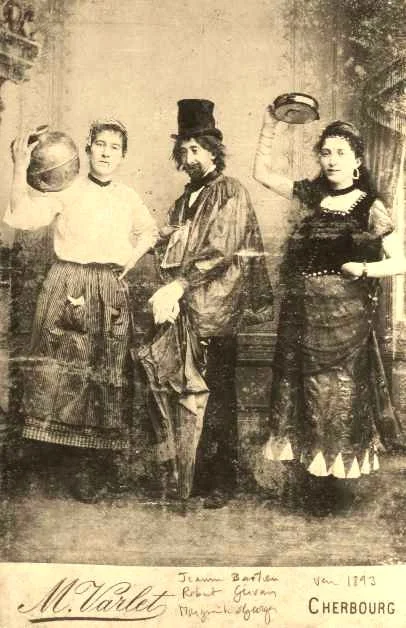
the two 1/2 sisters Jeanne Bastien,Marguerite George and Robert Gervais, dressed as Norman peasants, circa 1893, Cherbourg

Eugene and Marguerite Hausermann, Robert and Jeanne Gervais, circa 1895, at St Marguerite d'Elle

The House of Hausermann in Sainte-Marguerite-d'Elle (photo of 1910)
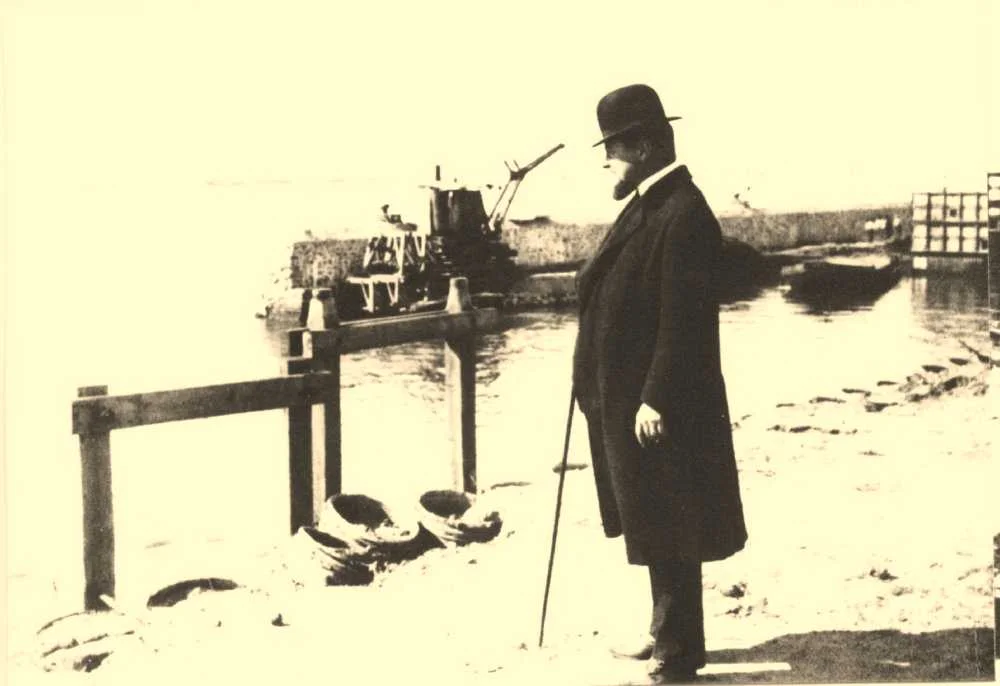
Eugene Hausermann, Director of the Port of Rosario, circa 1908

"Daddy"

"Nanny"
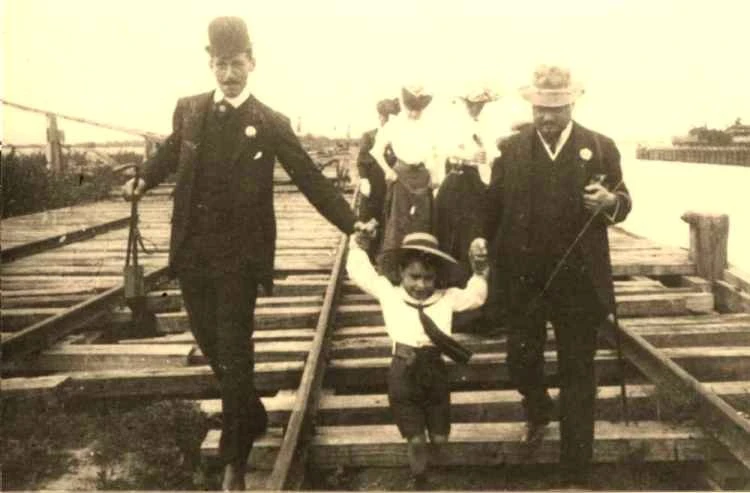
Visit of the family to the port yard, circa 1908

In the Hausermann house,
in Rosario
LFrom Nany to Jean and Germaine Hausermann
545 - Letters from 1927
621 - Letters from 1928
622 - 1929 Letters
623 - 1930 Letters
641 - Letters from 1931
643 - Letters of 1932
6531 - Letters from 1933
6581 - Letters from 1934
6642 - Letters from 1935
6721 - Letters of 1936
6754 - Letters from 1937
6852 - Letters of 1938
6901 - Letters of Jan/Feb.1939
6902 - Letters of March/April/May1939
6903 - letters of June 1939
6904 - Letters of July/August 1939
7101 - letters of seven 39
7102 - Letters of Oct 39
7103 - Letters of Nov 39
7104 - Letters of Dec 39
7105 - Letters of Jan 40
7106 - Letters of Feb 40
7107 - Letters of March 40
7108 - Letters of April 40
7109 - Letters of May 40
7201 - letters from June 40
7202 - Letters of July/August/Seven 40
born 30.09.1869, † 06.02.1924 to 55 years
Marguerite George,
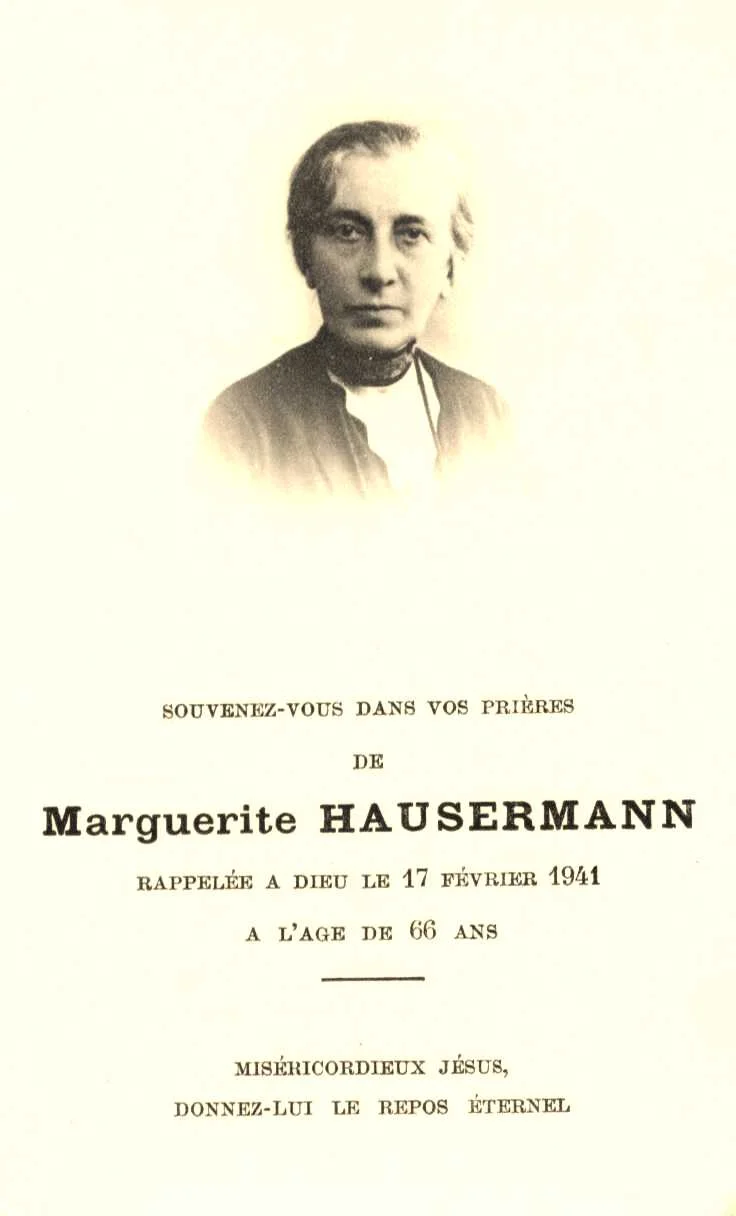
born on 10.05 1874, † on 17.02.1941 to 67 years
my maternal grandparents
49
Eugène Hausermann was born in 1869 in Paris at his father's and mother's house, 31, avenue d'Orléans, son of a Swiss stone engraver: Rémy Hausermann (page 42) , and Marie Suter (page 43), daughter of a cabinetmaker also of Swiss origin.
Marie Suter was a Catholic, but Remy Hausermann was a convinced Protestant and Eugene Hausermann was raised in the religion - I'm not.
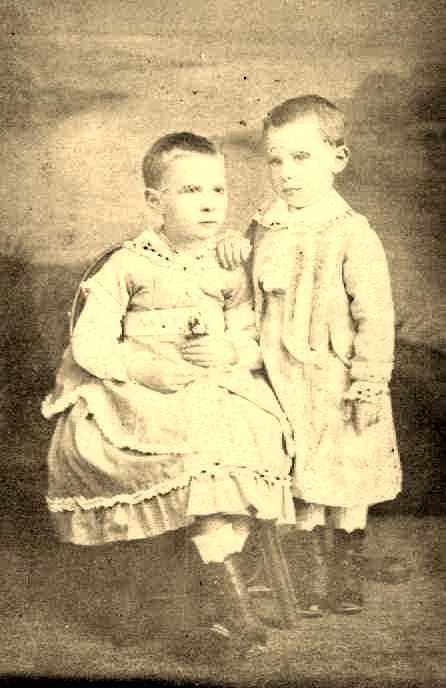
Alice and Eugene Hausermann, circa 1872

Alice and Eugene around 1874
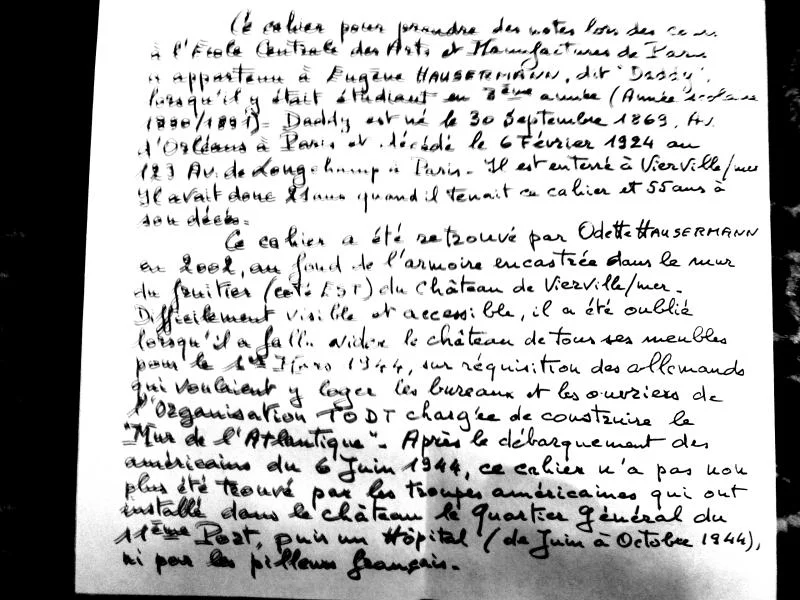
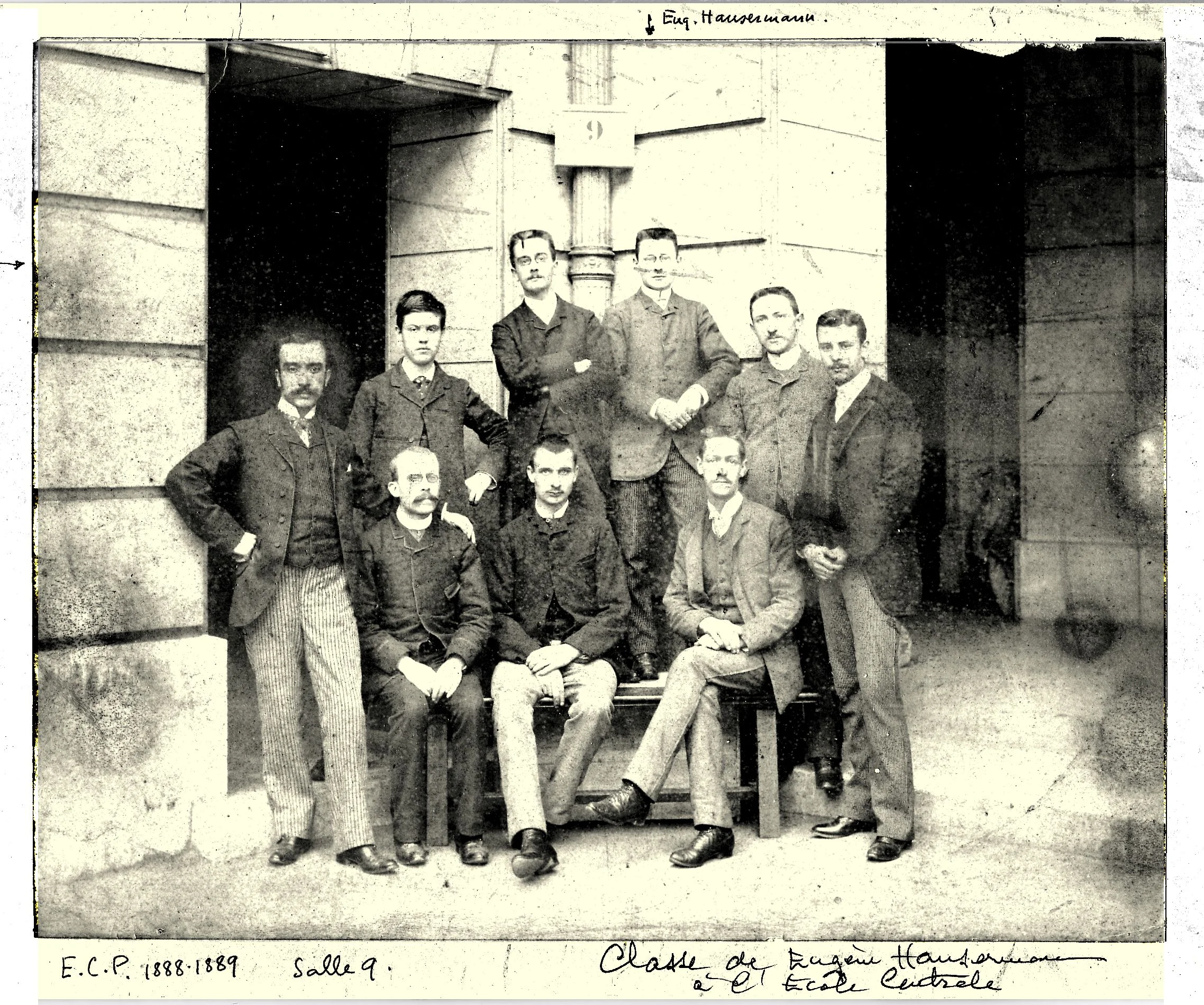
Eugene left the Ecole Centrale in Paris around 1891 and his first job brought him into thePublic Works Hersent (page 494) He was involved in coal research in Normandy. The coal basin of Littry-la-Mine was then abandoned (a book on geology on this basin, annotated by Eugène Hausermann, was preserved, linked by Claude).


How Eugene met his future wife, Marguerite George, remains uncertain, but by 1872 the Hausermanns and Weills knew each other in Paris (Rémy Hausermann and Charles Weill (page 45) had been witnesses of the marriage of a brother of Remy in 1872"The parents of Robert Gervais also seem to know that Charles Weill Sr. (page 44)The centennial, Robert Gervais' grandfather reportedly accompanied Charles Weill Sr. in his commercial expeditions from Paris to Strasbourg for the sale of horses to the army during Napoleonic wars.
In any case, Eugene met the two little daughters of Charles Weill, Jr., Jeanne Bastien and Marguerite. GeorgeHe was in Cherbourg, and he asked Marguerite to marry him.

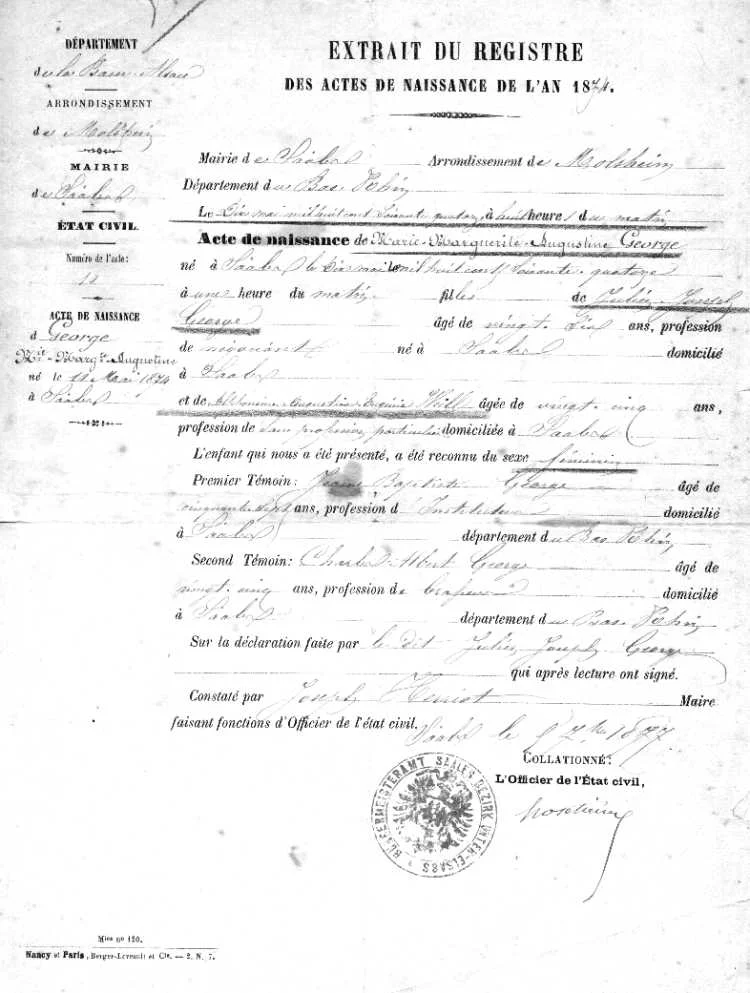
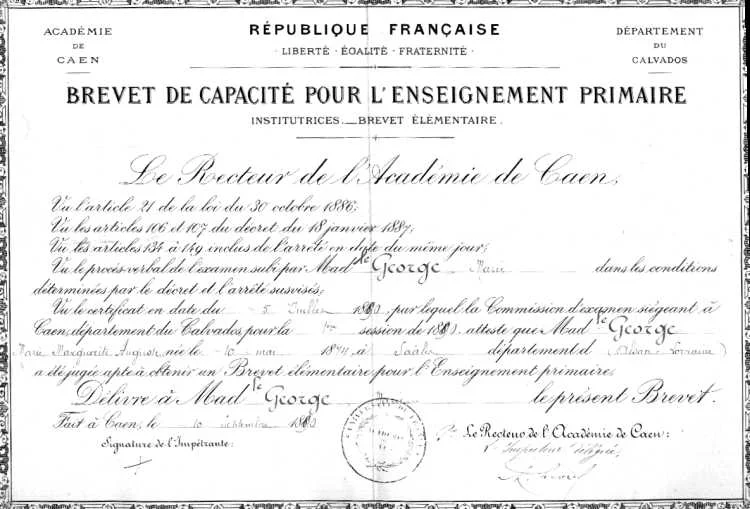
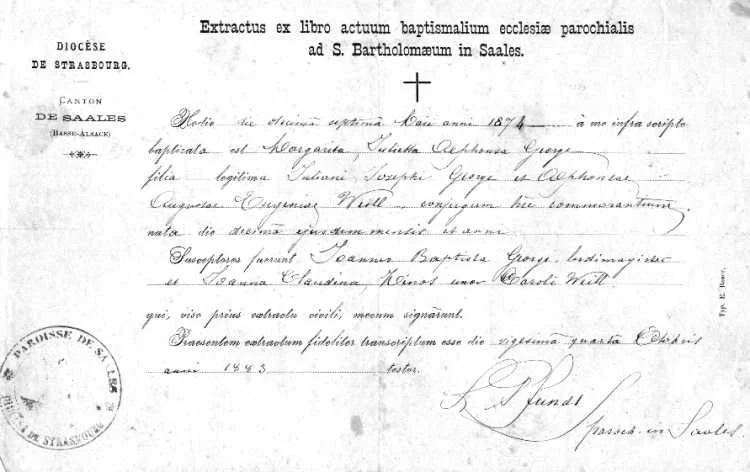
Marguerite was born in Saales, in Alsace, on May 10, 1874, therefore in Germany (see birth certificateIn order to avoid being German, her parents emigrated to France and settled in the CherbourgIt was therefore entirely raised in Normandy and a series of
photos of her childhood (page 491).We also have his Certificate of study and its Patent, all passed to Chergurg. Marguerite was, of course, Catholic (see Baptism, in Latin, in the church of Saint Bartholomew of Saales) and the marriage project was problematic, because Rémy Hausermann (page 42)The father of Eugene did not want to hear about it and he did not attend. He was celebrated however at the Protestant temple, with a complement to the sacristy of the Catholic church.
Eugene Hausermann ("Daddy") was tolerant and his three children were Catholics. Daddy tried to question the Catholic baptism of the boy, Jean Hausermann, but he did not insist. Nanny thought that if he had lived longer, he would have converted. He went to Mass with the family.
After the ceremony of 17 August 1895 in Cherbourg, the couple Saint Marguerite of her (near St. Lô), where the first child was born: Suzanne, George Chedal-Anglay's future wife ("Tante Suzon"). kept from this Norman era (page 492) several photos.
In 1897, Daddy was sent to Toulon to work on the construction of Missiessy's Darse in the Military Arsenal. He was still a young engineer and did not lead the project. He stayed there shortly, his family did not follow him and he was appointed to Bizerte in Tunisia, this time to lead the works. Good Life Certificate and Moralsdated 16 August 1897, had to be established for departure to Tunisia.


The family, with the first daughter Suzanne, has therefore gone to Tunisia (page 493), for the work of the Arsenal of Sidi Abdallah, Bizerte, where the young engineer Hausermann has succeeded so well that the company Hersent sent him to direct the work of Dakar (page 4932) in 1904, and
port of Rosario (page 4953) In 1905 (Nany refused to leave first in Argentina, but finally would have accepted the personal intervention of Mrs. Hildevert Hersent).
At the time, Hersent (page 494)
The two sons of the founder Hildevert Hersent (who had started pushing the wheelbarrow on the construction sites) were led by Jean and George Hersent.
work (page 4953), interest in the results, conditions of stay overseas, the way, often very paternalistic, to lead the work and direct the men.
In the meantime, they were born in Bizerte in 1898, Simone Hausermann (page 39) (Yves' future mother) and in 1903, Jean Hausermann ("Totonni" or "Toutouni").
Note that "Nanny" caught malaria in Bizerte and never recovered completely.
The stay in Rosario (page 495) lasted 6/7 years (1905-1912) interspersed with a 6 month return to France in 1910.
In Argentina, the holidays were Riachuelo (page 4954), and page 49541) in Uruguay, during the southern summer of January to March.
The Hausermanns had the opportunity to make two great trips, on an uncertain date at the Iguazù Falls (page 4951) , and in 1908 in Chile (page 4955)
and more The Andes Low Valleys (pages 49551), the high Andes valleys (pages 49552), The Andes Pass (page 49553),
beaches of Chile (page 49554), Valparaiso (page 49555), Daddy's accounts in Chile (page 49556).
It's on the trip. to France in 1910 (page 496), that on the boat - the Ceylon -, Simone, aged 12, met her future husband Jean Cordelle (page 39), of the same age.
See stopovers in Santos (page 4960),
on stopovers in Rio (page 4961),
the end of the journey to France in 1910 (page 4962),
Normandy where they looked for a house for sale (page 4963),
the visit to Saales by the Alsatian cousins (page 4964),
In 1910, the Hausermanns had become rich with these overseas stays, where Eugene was interested in the profits of the yard (from 1906 to 1911, he received more than 600,000 gold francs, or about 12 million francs from 1990). Château de Vierville (page 496)This 17th century residence was owned by the Le François, the grandparents of Louis Godard, who had sumptuously furnished it, with exceptional collections (high Portuguese era). Sosthenes Le François had been an engineer at the coal mines in Littry and in mines in Portugal.
The castle was first sold by the heirs to merchants of goods (2 successively around 1906-1910), who dispersed the collections, before selling the castle, almost empty, to the Hausermann in 1910. The large Portuguese buffet and the richly carved twisted column bed that were at Saint Laurent in the Priory came from the collections Le François.
on Daddy's accounts in Montevideo in 1911 (page 4965), on a business trip
the inventory of the caisses for the return to France in 1912 (page 4966)
In 1912, the Hausermanns have returned permanently from Argentina (page 496), and they spent their 6 months off in Vierville to install the castle, still almost empty, and where Rémy Hausermann had settled, retired, and mainly looking after the vegetable garden. The Hausermanns stayed for a few months at the beach hotel (the one who recently burned in the center of the village).
Rémy Hausermann, who was not getting along well with his son and his Catholic family, left to live with his daughter Marthe Feuilrebois in Vendée.
The photographic memories of these years are in the pages 497 for the years 1914-1916 and 498 for the years 1916-1920Eugène Hausermann then worked as technical director at the Hersent headquarters, 60 rue de Londres, until his death. died in 1924 (page 499).
He lived with his family in a large rented apartment at 123, rue de Longchamp (16th Arrdt in Paris).
He was sick of the liver (he ate and drank well), he spent every year in Vichy, where he liked to be photographed. We have several portraits of him. His grave is in the cemetery of Vierville.
Suzanne Hausermann married in 1917 With Georges Chedal-Anglay, a Central engineer who worked at the Hersents and was then in the Vosges War. They had their first 2 children quickly: 1918 and Jean-Pierre in 1920.
Simone Hausermann married Jean Cordelle in 1920 (see page 388)They had their 2 elders Francis in 1921 and Michel in 1922.
After the death of Daddy, "Nanny", Yves' grandmother, remained a widow 17 years old, residing first 123 rue de Longchamp, then from 1933 in a new apartment and rented also, on the 4th right of 27 avenue de Lamballe (neighborhood of Passy in Paris). The 4th left was then rented by George and Suzanne Chedal-Anglay, on the return of their stay in Greece. See 1921-27, Chapter 50, then the
years 128-39, chapter 60,
In the meantime, Jean Hausermann, who became an engineer of Public Works, entered the Hersent family in 1927, married Germaine Saillard in 1929. They had their first child Jean-Paul in March 1930 and soon left in Argentina in 1931. Rosario, where they found Jean and Simone Cordelle who had been there since 1928 with their 3 children.
"Nanny" received her children and grandchildren during their stay in France, Paris and especially in Vierville during the holidays. Both sons-in-law and son worked for Hersent, a company that then had activities all over the world. Nany wrote a lot to her three children. Only the letters written to Jean Hausermann were kept, I remember that notably Simone Cordelle was burning these letters systematically during each move. Today the reading of these letters is exciting and they have been partially transcribed.
At the beginning of the war in 1939, the two sons-in-law Cordelle and Chedal had already returned to France, Jean Hausermann remained in Rosario.
Chapter 70
The winter of 1939-40 took place outside Paris, evacuees from almost all its population for fear of bombing: Nany was in Vierville, the Chedals and the Cordelles in Coutances where the high school had attracted students to "prepa" at the Grand Ecoles.
During the occupation, children and grandchildren moved to Paris, but Nanny stayed at Vierville Castle, where she died in February 1941 (page 499) , perhaps from cancer, after having suffered to see France and her house in Vierville occupied by the Germans, which she did not like, family tradition dating from her Alsatian parents.
Nanny was an authoritarian grandmother, not badising with the timetables (at 12:30 and 7:30 p.m. precise), nor with the dress, cleanliness and discipline. She made a point of coming to the Germans who had only very partially occupied the rooms at the castle until 1944, and who respected her with perhaps some concern in front of her eyes without aménity.
Brigitte, her 16-year-old daughter, was also there and told her memories:
"Unless there were 14 officers and their orders at the beginning, the door was in the old laundry room and the wood was full of trucks and military vehicles. I had forgotten to close the gate by going to pick up the bread (and the Germans had entered). I still saw Nany, already very sick and in a bathrobe waiting standing on the 1st floor, the cane in hand. Five great officers were riding on the 1st by the large staircase. When they came to his height, she lifted her rod to keep them away and asked them to stop there. In front of his authority, they actually stopped to discuss.
Father Dubois, then mayor, had managed to avoid the occupation of the house until July 40, but it could not last. From September, October 40, there was only the colonel and his order. Towards the end of 41, the officer, a captain installed the Kommandantur in the room of "Tio Mio", the rest of the officers being with the mess at the Than mansion. This was a lot of aisles and came, but there again it did not last."
Back to home