

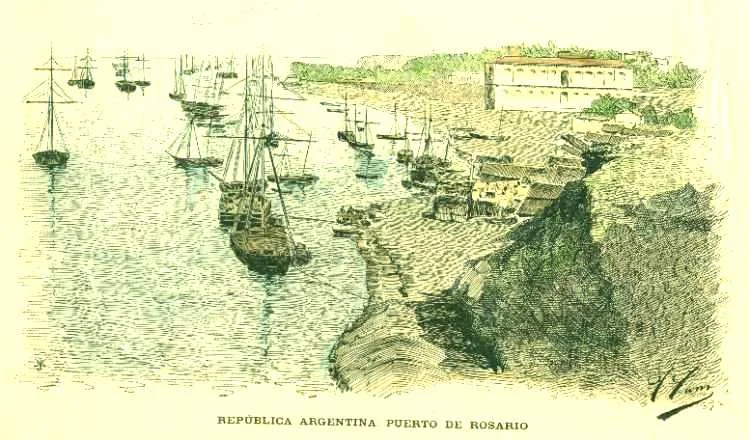
engraving representing the Port in 1889

1910 - Official visit, from g. to.d.: the President of the United States, Theodore Roosevelt
The Director of the Port Corporation, Mr.Flondrois (from Hersent)
Representative of the Republic of Argentina: Mr. Piaggio (Professional Engineer of the Ministry of Public Affairs)
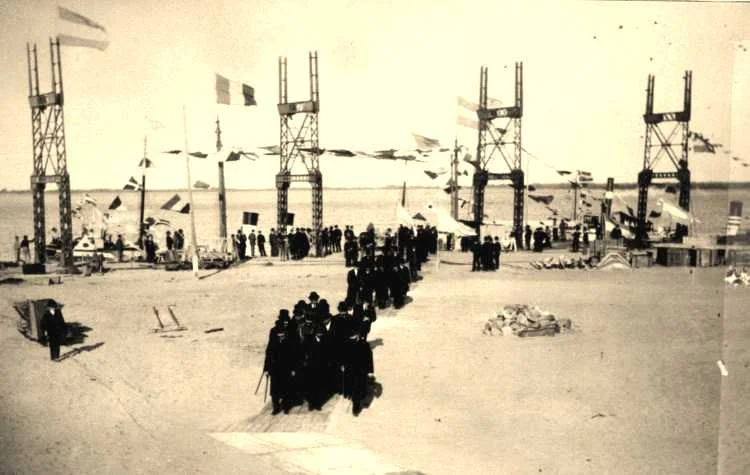
the visit of the port by the personalities
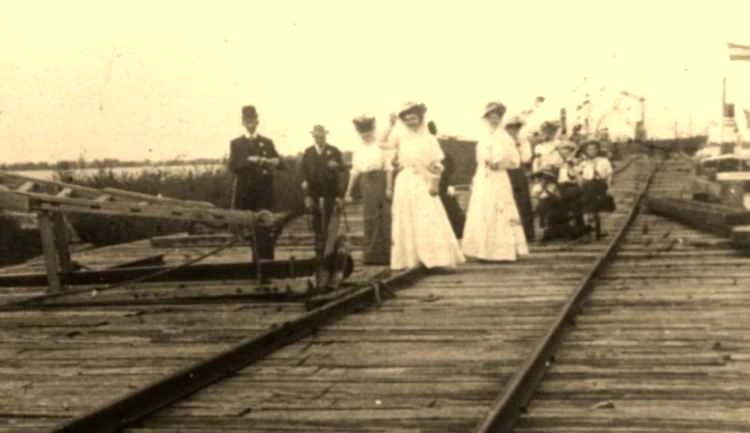
family visits
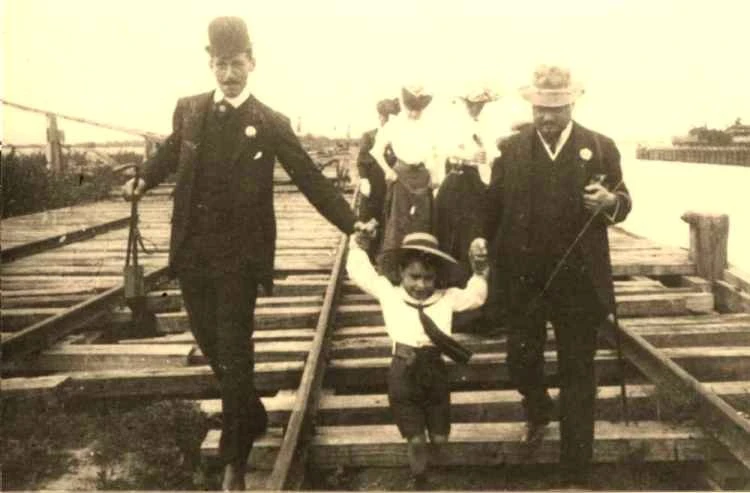
visit of the families: John and his father
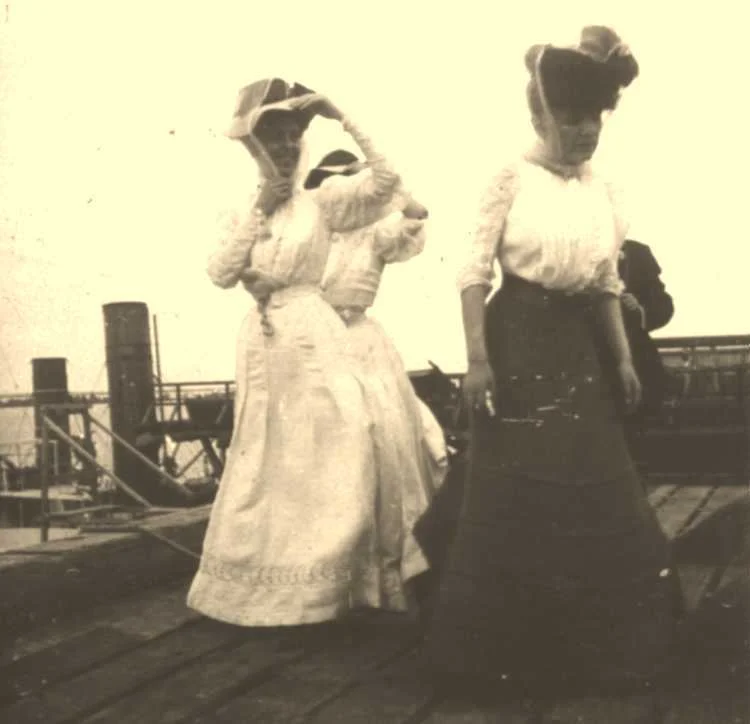
family visits

"El director general de la constructiòn,
ingeniero E. Hausermann, in gabinete
of trabajo"
This photo was taken by surprise by a journalist, Daddy refused to interview, and a journalist had opened the door to take his picture.
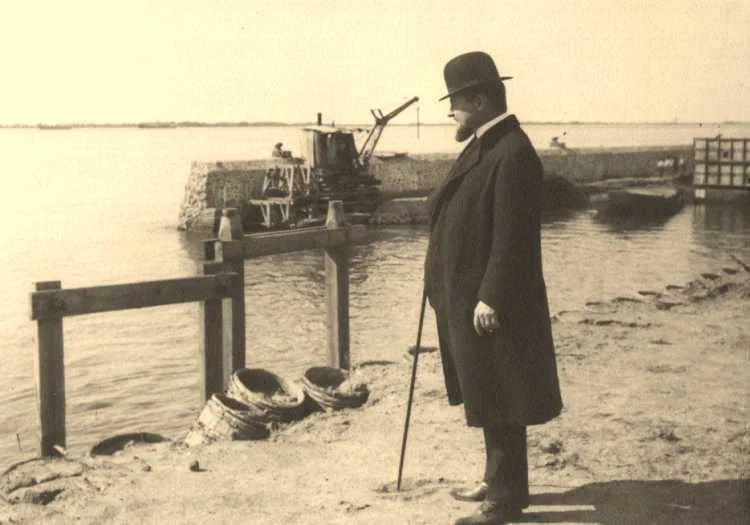
Daddy on the job with his beautiful black redingote. There is one left at the castle of Vierville at Jean-Paul's

a group of employees from the Daddy office

in 1906
4953
The concession of the port had been given for several years to the Society of the Port of Rosario (subsidiary of Hersent) and the construction work was entrusted by this Society to the Enterprise Hersent whose director on site was Eugene Hausermann 1906 to 1912.
The work of the harbour, decided in 1901, awarded to the Hersent, began in 1904, and lasted until 1912.
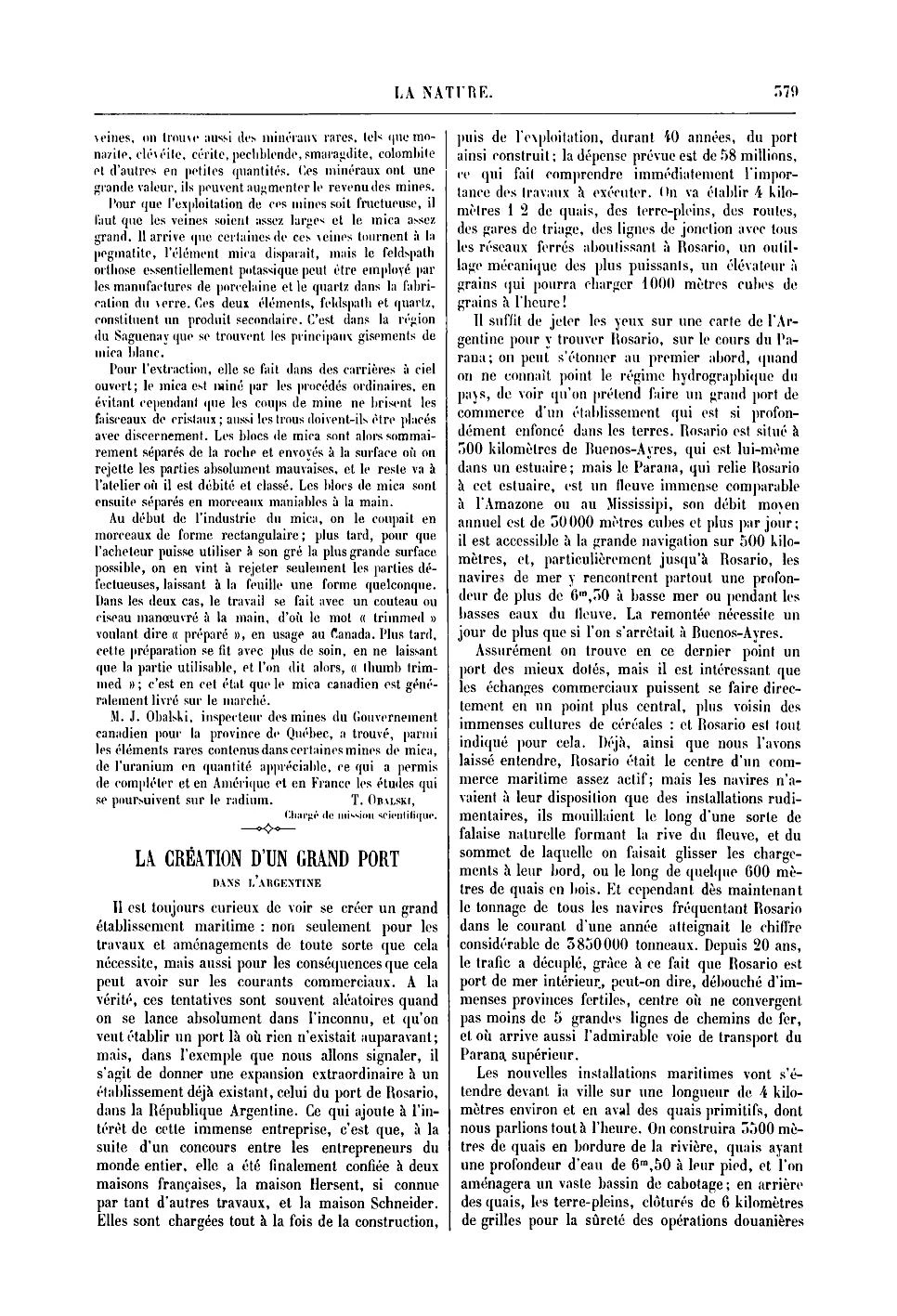
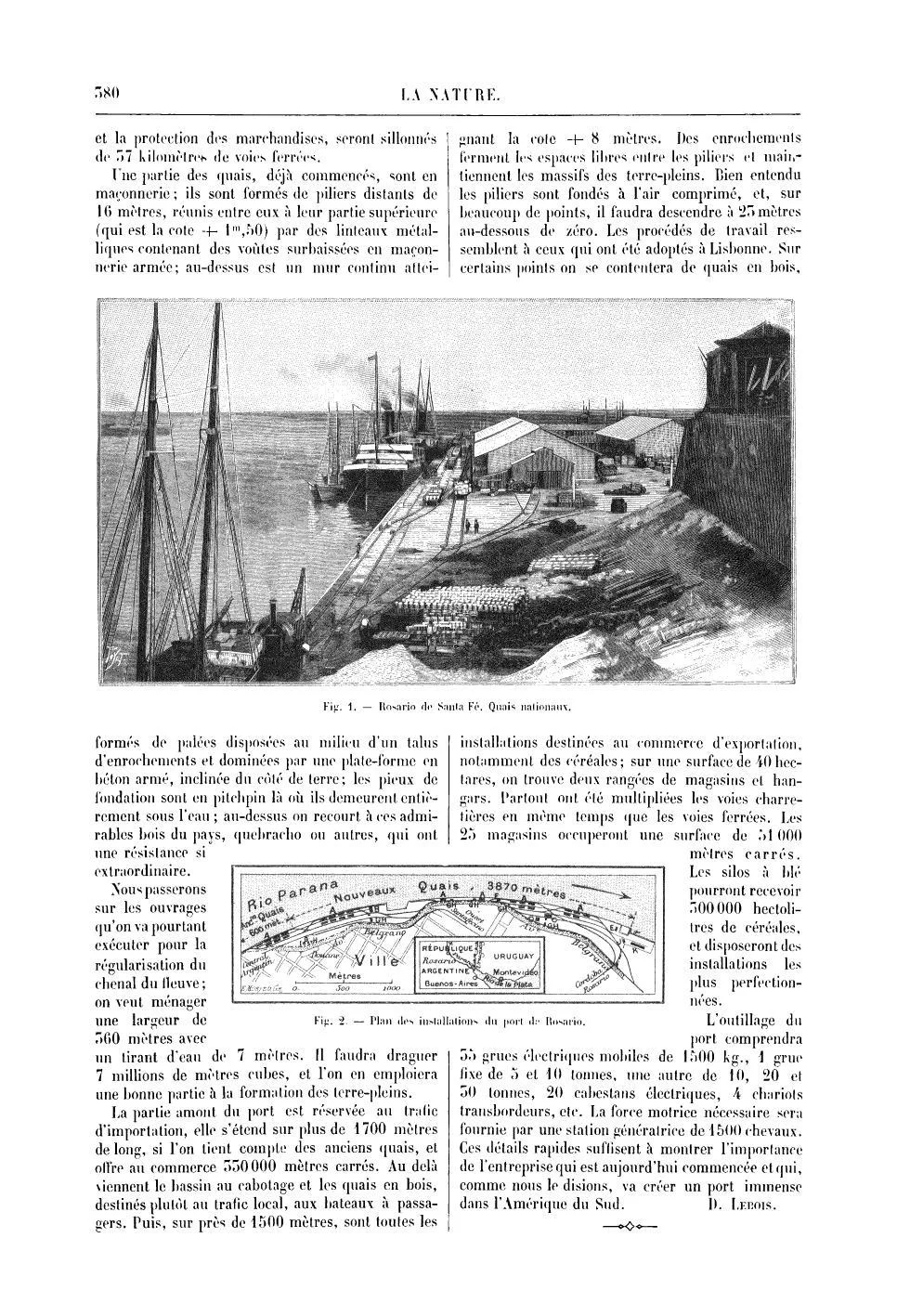


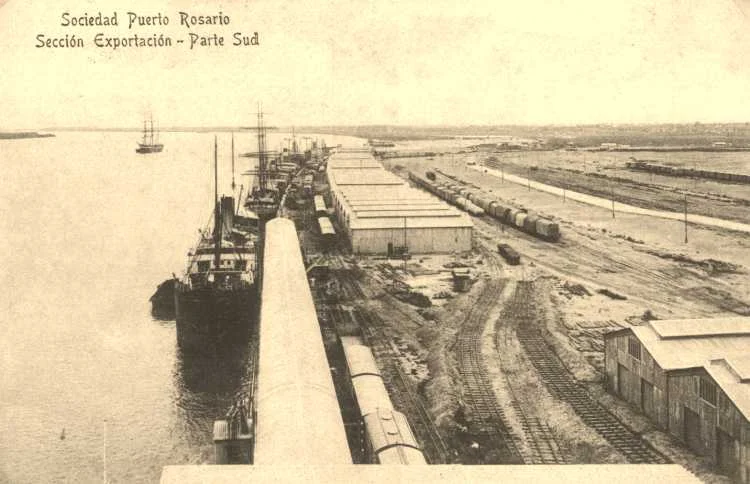


article from an economic newspaper in France, dated 3 November 1901, describing the works:
"The Port of ROSARIO-
The construction of the port of Rosario is decided today. The auction of the works, which will be put to the competition, has just been authorized by decree issued by the Argentine government. This measure was necessary because of the importance of the city which, after Buenos Aires, is the main city of the confederation.
Located in the province of Santa Fe, on the right bank of the Parana River delta, it rises on a terrace 20 meters higher than the average water level. Founded in 1725 by Don Francisco Godoy it was only an insignificant village until about 1852; In 1854, General Urquiza ported the eleven confederate interior provinces to the exclusion of Buenos Aires, and in 1857 established differential rights to the detriment of that city.
Since then, Rosario has progressed very quickly, because of the excellence of its river port, accessible to large seagoing ships and perfectly sheltered. Rosario is the natural warehouse of the Argentine provinces west of Parana. Before 1860, the port was without direct trade with the overseas countries. Today, the transatlantic navigation of the high seas vapors only ceases at Rosario, 250 kilometers in straight line from the bottom of the estuary of the Plata and the river navigation of Parana has its main station in this port. The river makes a elbow in front of the city; The main arm that borders it is about 3 kilometers wide to the first island that cuts off the huge bed; to find the other bank, you have to go 50 kilometers. From the river bank, exposed to the northeast, and forming here a convex terrace, the city sinks into the fan tip. This harbour from the bottom Parana, in direct communication with Europe by fourteen lines of steam, is served by steams from the overseas from 3,000 to 4,000 tons. While the main lines of the Argentine Republic radiate from this port in all directions towards Patagonia, Chile, Bolivia, the Parana puts it into relations through regular lines of fluvial vapours with Paraguay and Brazil.
The city is in the shape of a circular area; the streets are parallel or perpendicular to one of the rays; the river describes the arc of circle. The narrow and poorly paved sidewalks are lined with field-laid railway tracks and a stream that often takes the proportion of a ditch. The church, the only monument of the city, is, like all those of the country, surmounted by a dome and two Byzantine towers. The houses in the center are pretty and luxurious, built on the floor, without floors, without cellars and painted in clear colours.
The rapid prosperity of Rosarlo has been due mainly to the agricultural settlements surrounding it since 1880, whose cereal production is beginning to be considerable. Every year thousands of European farmers land there and quickly transform the savannahs of the province of Santa Fe into a huge field of cereals. The population, which has doubled in a few years, is essentially cosmopolitan and commercial. It can be estimated at 70,000 inhabitants."
___________________________________________________
Cited by an Argentine newspaper, 30-8-1907:
" El ingeniero Sr. Hausermann, directed by the difìcile constructiones del puerto, es emulo del senior Flondrois. In el extrangero, donde a dirigido obras de la misma naturaleza, su nombre es conocido y estimado. Téchnico de primera fuerza, su rubusta inteligenzia translates into las grandes obras que traza and vigila. In the construction of nuestro grandioso puerto, ha demostrado sus notablees cualidades de ingeniero y à la las préas recomendables de su caràcter, pues es sumamente querido por el numeroso personal que està sus òrdenos. Social shadow, hace querer como el senior Flondrois y bas el prestigio bien ganado de su nombre en tìtulos francos y caballescos.
Recibio el titulo de ingeniero en el ano 1891, de la escuela de Ingeniera Central de Paris, seguida con un cargo de importencia, en la casa Hersent, dirigendo màs tarde por cuenta de esta, las obras del Arsenal Militar de Bizerta (Tunisia), y las del arsenal militar de Dakar.
Tales sound in raspberries disenados, los représentantes de la empresa del puerto."
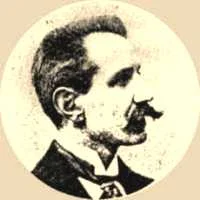
Ingeniero Jorge Hersent concesionario represents the Puerto del Rosario society.

Ingeniero Augusto Flondrois, director general representing legal authority of the empresa del puerto
Eugene Hausermann left the port's works and returned to France in 1912. On this occasion, a luncheon was organized at Rosario,
Luncheon reported by the press.
Back to home