


Life under occupation 1940-41-42
724
In the autumn of 1940, France had emerged from the fighting but it was largely occupied and severely looted by the Germans who continued the war against England. The era of restrictions began and only worsened until 1945 (the last tickets, bread, disappeared only in 1949 !).
Nany remained in Vierville, in poor health, morally undermined by the defeat and presence of German officers housed at the castle. She died there on 17 February 1941(page 23) The division of the estate (especially the castle) was only made after the war with the return to France in 1946, of the Hausermann. The Parisian apartment of Nany, next to that of the Chedals, remained unoccupied, but with all the furniture. Moreover, Paris was very sparsely populated throughout the war, I remember signs "apartments for rent" on almost all the doors of buildings.
Philippe, soldier, After the retreat in May and June 40, he caught a pleurisy in June before being demobilized. Serious illness, not well treated at the Army, he was then in Vierville for a long recovery, several years. He took care in particular to try to grow some layer mushrooms (curtain of Paris) in the cellar of the castle. Very mixed success, abandoning, then one or two years later, and a flood of the cellar, the mushrooms developed unexpectedly, there were everywhere in the cellar.
The Chedals moved to their fourth-century apartment, Jean-Pierre which entered Centrale, and Brigitte who went to Molière High School.
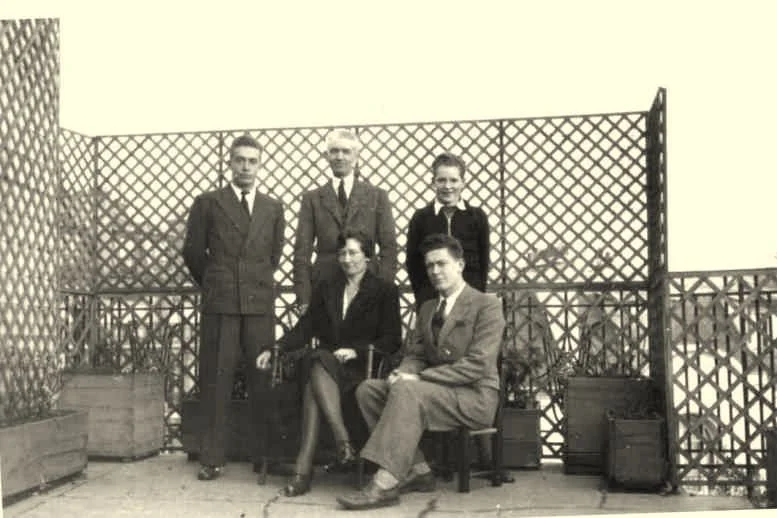
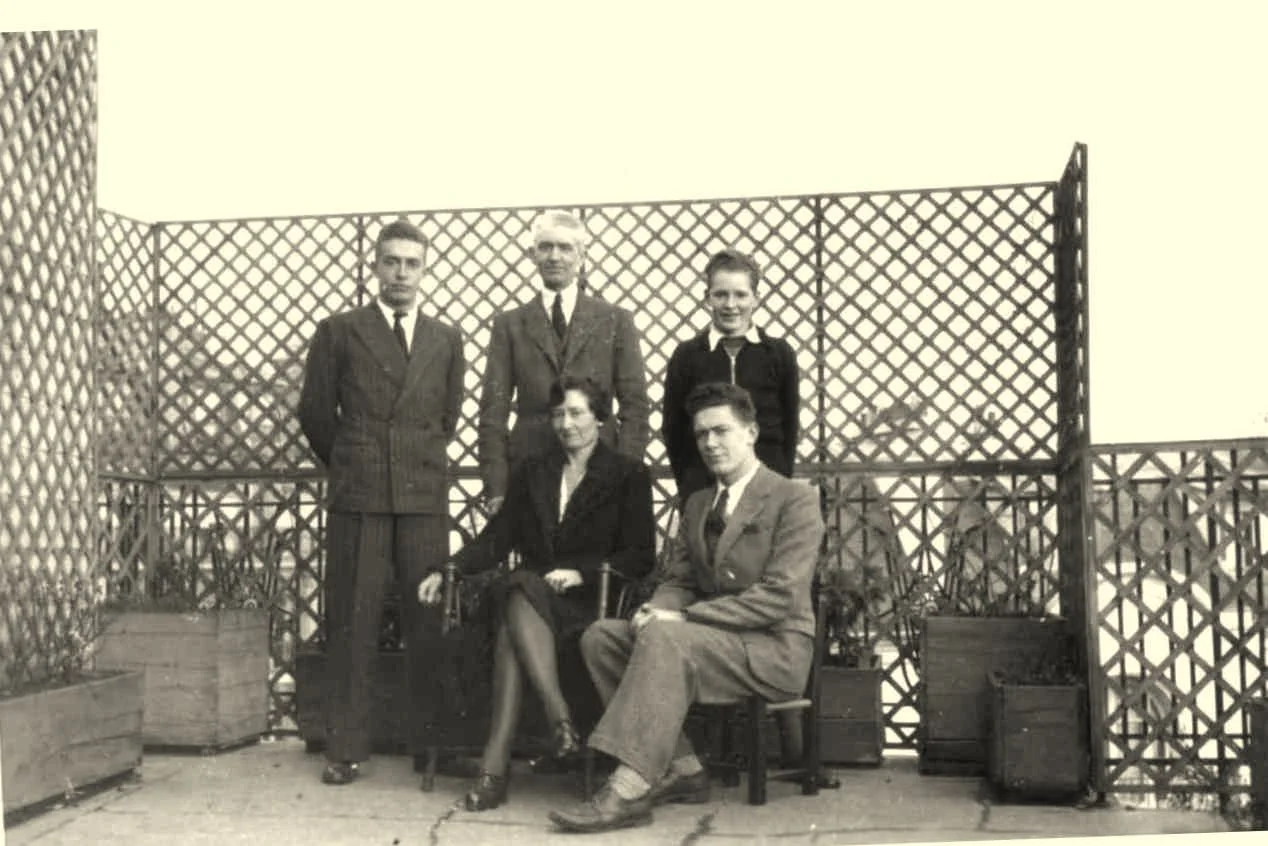
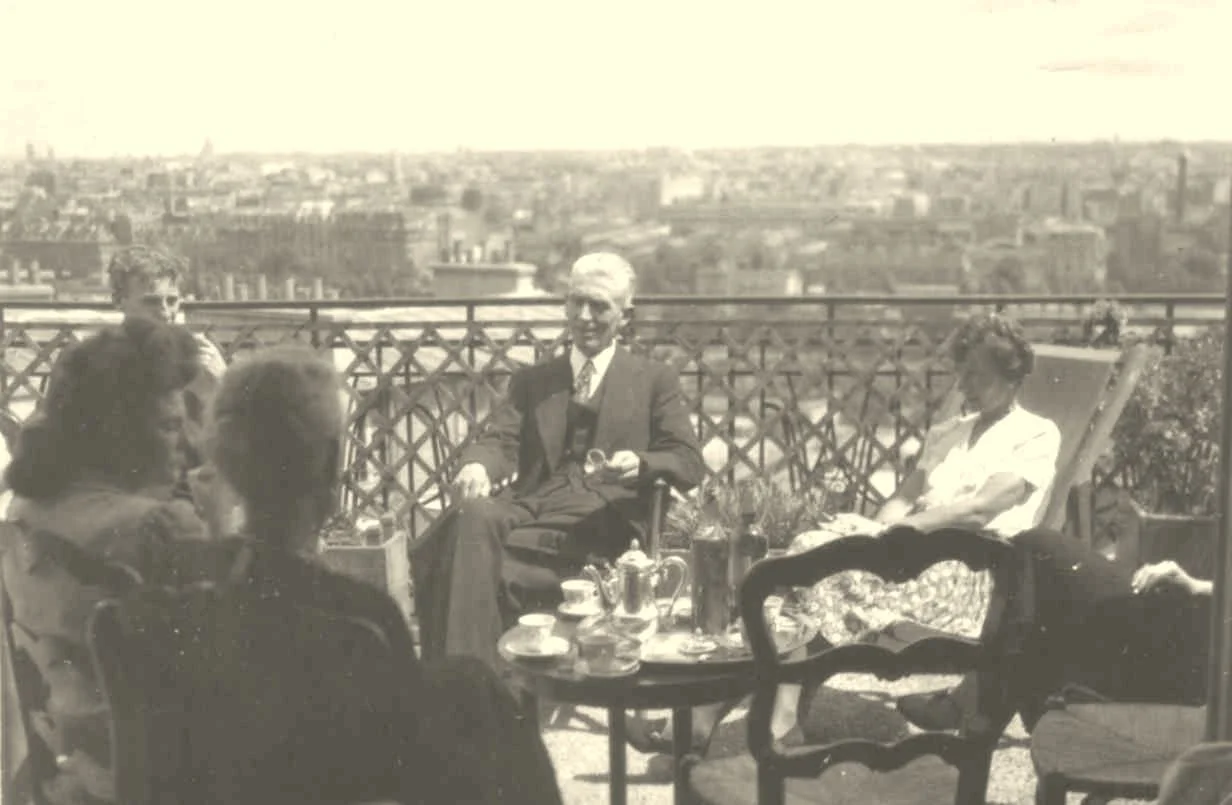
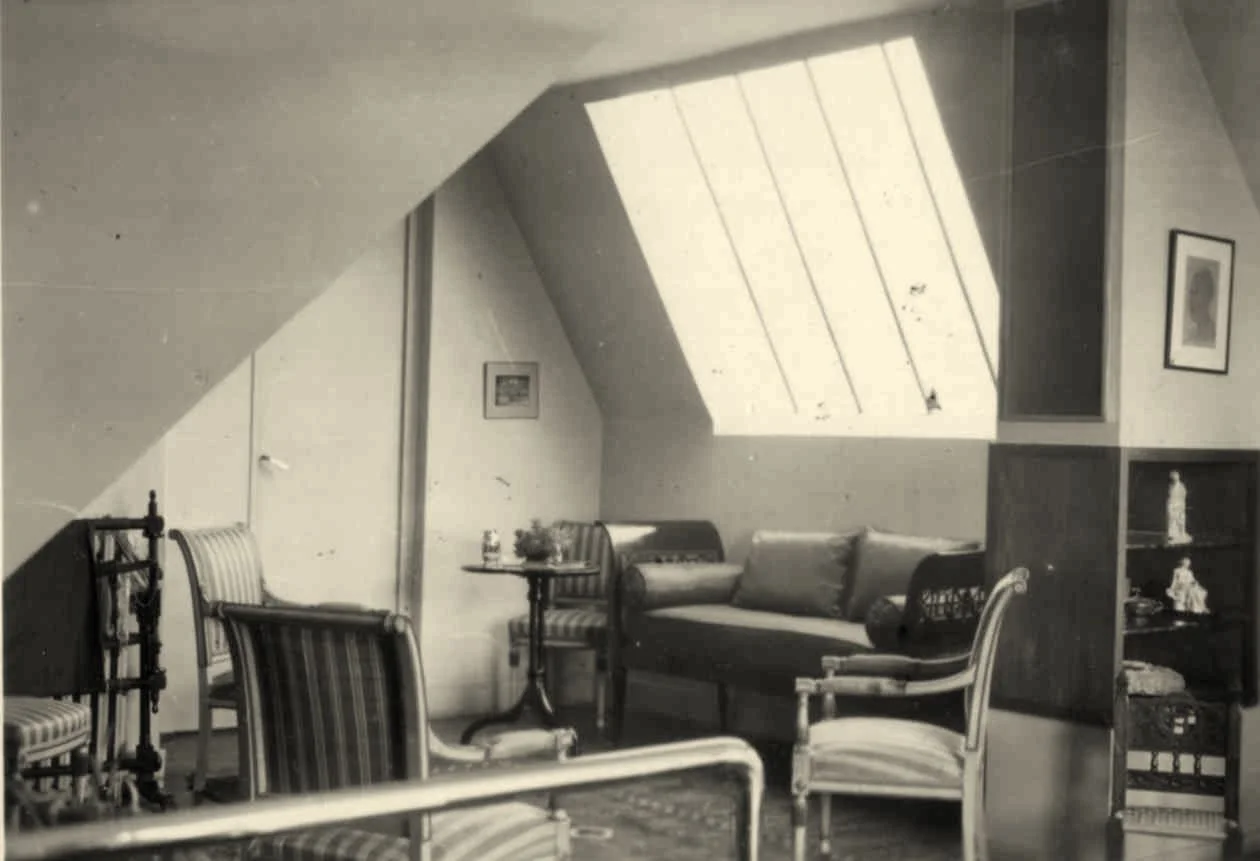
My parents, After a few months in the apartment of Nany, they found easily an apartment to rent in the same building, but on the 7th 8th floor. Very large, on the 7th, 4 rooms, bathroom, kitchen, office, bedroom, on the 8th (by inside staircase): a very large living room in L, 1 large bedroom with bathroom, a terrace with 2 levels with extraordinary views over all Paris, from the Sacré Coeur de Montmartre to the woods of Meudon, passing through the Eiffel Tower, the Grand Palace, Notre-Dame, Saint Sulpice, the domes of Invalides and Pantheon, the rock of Vincennes, the Seine in the foreground, etc.
They installed their furniture from Argentina in 1939 and until then remained in crates.
Our cars, the Peugeot 402 of Chedal and my parents, were put on hold in 2 closed box-garage, under the building, and miraculously forgotten, they escaped all requisitions...Of course rationing gasoline for authorized professional need only.Françoisreceived at Centrale, did not enter, but re-doed a mole in Janson to try Polytechnique.
Michel, which saw his Navale contest cancelled in June 40, also re-does a mole.
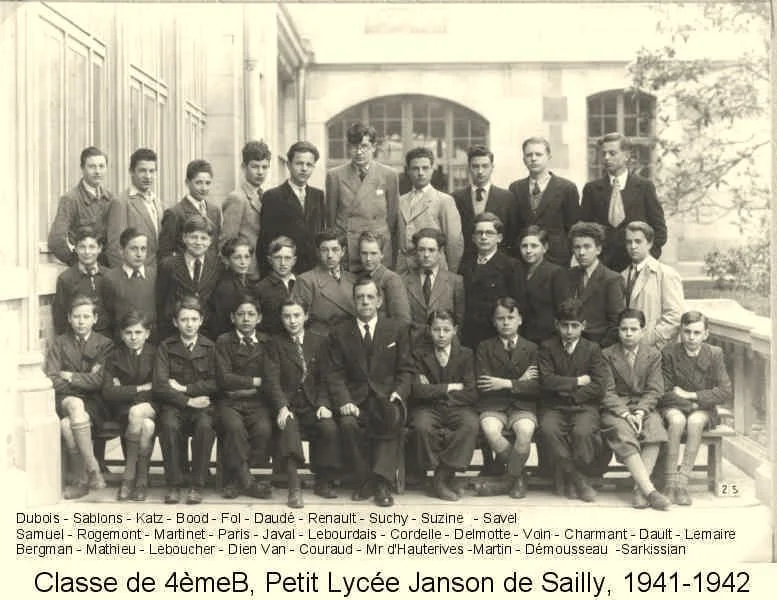
As for me - Yves - I went back to the Little Lycée Janson in 5th B (i.e. without Latin), which was quite rare at that time, but more suited to my level, I was only 10 years old, and I was taking French classes quite poorly.To go to the school located at 1.7 km, it was necessary to walk about 18 minutes, to do 4 times a day. I don't remember that it weighed me. It was like this... There was possibility to make 1 metro station (from La Muette to La Pompe) which saved only half of the way, so without interest, not counting the cost, low but also that counted. Later, around 1943, I made this bike ride, it was parked in our closed cellar, under the building, with firewood. Not very convenient, it had to be large enough to get him down and up by a narrow staircase.
The relationship with the Jean Hausermann family was rare and irregular. See the few letters exchanged on the pages 7221, 7222, 7223, 7224, 7225
Life has been organized gradually, with increasingly tight restrictions on everything, and not just food. Additional supplies have come often, brought back from Vierville or shipped by post or railway parcels. Thus we could have enough but essential supplements: butter, eggs, potatoes, rabbits. We also brought wood to heat up and once we killed a pig clandestinely behind the castle. Food also came from the white, where the Hersent offices were set up in "nono" zone, i.e. not occupied. There was always gas in the city, often under reduced pressure. Electricity cuts were increasingly frequent and the elevator stopped very quickly (there were seven floors...). We were always spending holidays in Vierville (15 days at Christmas and Easter, 2.5 months in summer). But from May 43, access to the beach became forbidden. In fact, access within 10 km of the coastal zone was forbidden to "non-residents", but we could always turn this settlement with local identity cards provided by the Mayor, with German occupants not fooled but arrangers or indifferent.The train has always operated from Paris to Bayeux: slow (5 to 6 hours) and rare and crowded (1 per day at the end) and also the post (very well, especially for letters, 24 hours).The long distance telephone did not exist, but the telegraph was working properly (per carrier, it was faster than currently if you don't have a phone).In the autumn of 1941, Philippe was still in Vierville. Jean-Pierre was still at the Central School in Paris.
But François was received at Polytechnique, so he left in Villeurbanne (Lyon suburb) in an unoccupied area where the school was folded and transformed into a "civil" school, but his organization remained the same, almost military system, but without weapons, the great uniform was preserved but without sword.... (page 24)
Michel was received in Navale, he left in Toulon, where the school was folded (from Brest, occupied) (page 25)The Franco-German Armistice Commission tolerated this institution, as the Germans had left the navy in the false hope that it would turn against the English, especially after the affairs of Mers-el-Kébir and Dakar.
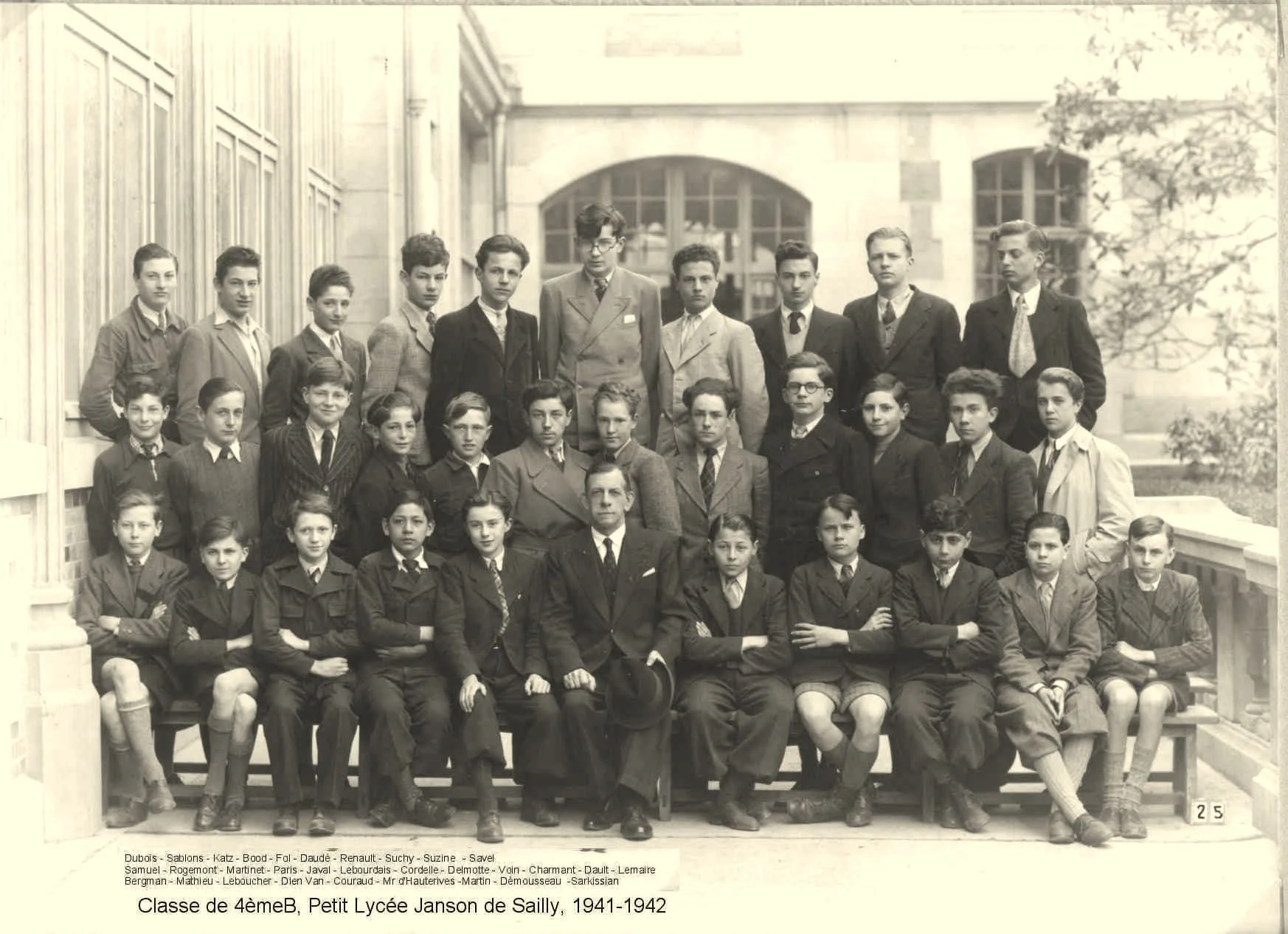
Brigitte and Yves continued their classes, I in fourth B in Janson, always the same journeys, but without my brothers.Interzone passages were rare but possible for important professional or family reasons. In particular, my parents were able to go to Lyon and Toulon to see François and Michel at the end of 41 or early 42.
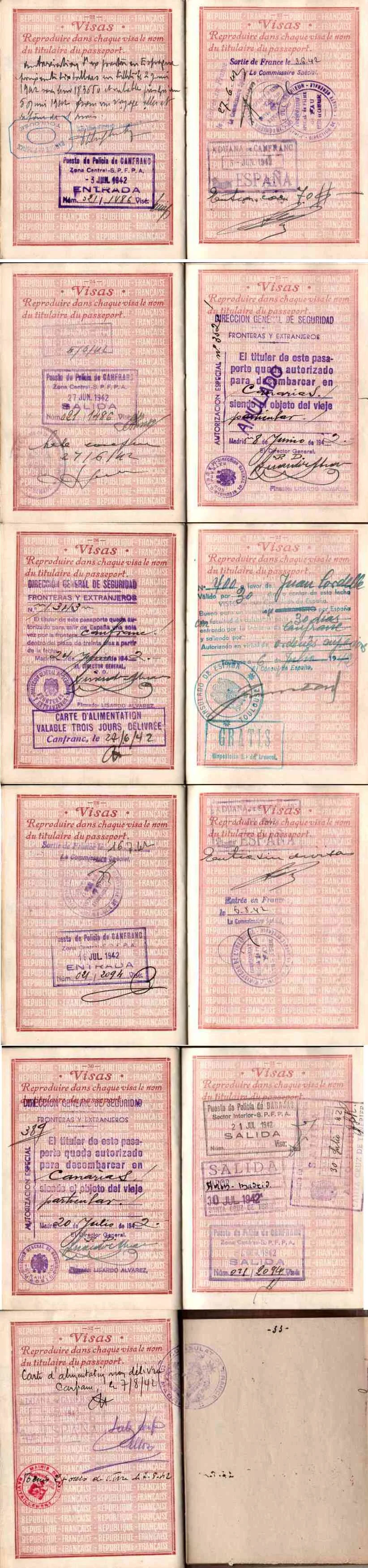
Papa went to Hersent's offices in the White several times, and even in Spain and the Canary Islands (Ténériffe where Hersent had work). I remember that he had brought us leather shoes, not found in France (unless of zero quality and severe rationing). These prohibited items were passed by taking advantage of "diplomatic valises" which escaped customs.
From end 42After the occupation of the "nono" zone and the first German defeats in the world, life became even more complicated.
All the older men escaped by chance from the STO (Compliatory Labour Service, Germany).
François was at the X, Villeurbanne until January 43, then in Paris, then in October 43 at the Ecole des Télécom in Paris, and in youth camps during the holidays.
Michel He was in Navale until November 42 (taken by Toulon and scuttled by the fleet), then released and sent in December 42 by the Navy to the Sup Elec school in Paris, then in summer 43 in the "Gendarmerie Maritime Légère", set up in Gourdon (in the Lot), where he was able to escape from the Germans and FTP, to meet on 25 August 44 in Toulon for the liberation of the city. He was immediately taken on the "Chaseur 106" (ex SC 690 of the USNavy, ceded to France). He ended the war on board, hunting mines off the French coast.
Philippe has escaped from the STO in Germany only by going to work underground in the coal mines in Bethunes.
Jean-Pierre He escaped because he was married and even a family man since March 44.
(details) The entire family in 1942 on the terrace of 27 avenue de Lamballe on the 8th floor, extraordinary view of Paris, from Montmartre to the hills of Meudon on the right
(details)
Interzone map of Mr and Mrs Drillon, friends of Argentina, engineer at Hersent, retired in Nice
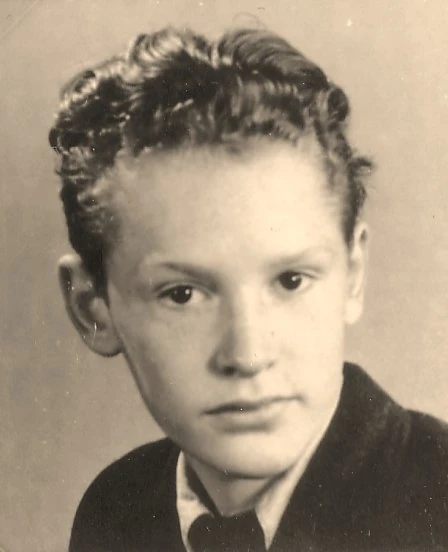
Yves
Mom, in Vierville, about 1941.
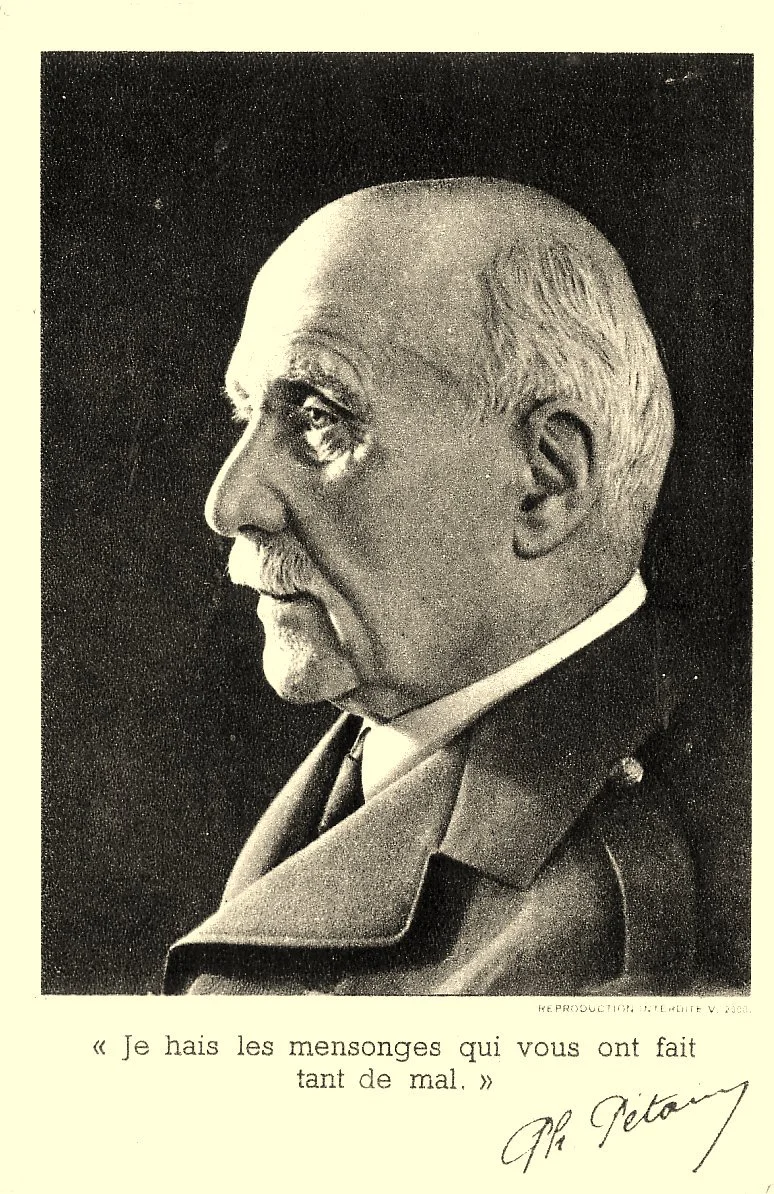
The portrait we saw everywhere. This is a postcard sold for the benefit of the "Winter aid of the Marshal"
(details) The 8th, 27 B.C. Hall
(details) The back to the right of the living room
(details) the back of the living room
Yves and Michel, 1942
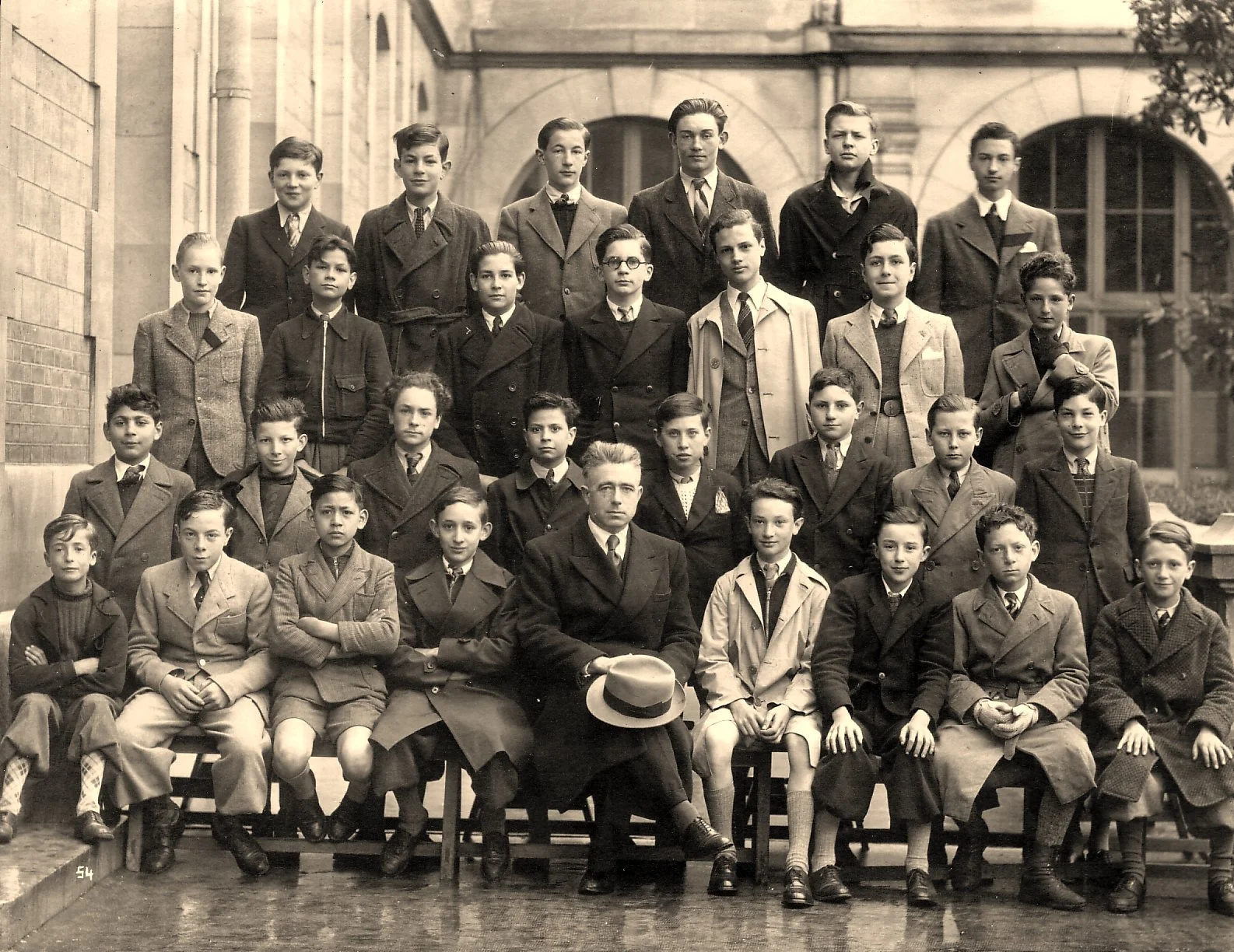
(details) The 5th B class, 1940-41
From dr to g and from top to bottom:
- Martinet, Bood, Brun, Bourguignon, Zuzine, Suchy
- Cordelle (nany's mourning), Rémi, Ricordi,
See, Renaut, Reva, Katz,
- Sarkissian,Renaud,Delmotte,
Llopis, Quaemeneur,Charmant, Bergman, Samuel,
- Perraud, Sebrig, Dinh Van, Ryst, Mr Mermet (drawing prof), Rioque, Fouraud, Frances, Leboucher.-
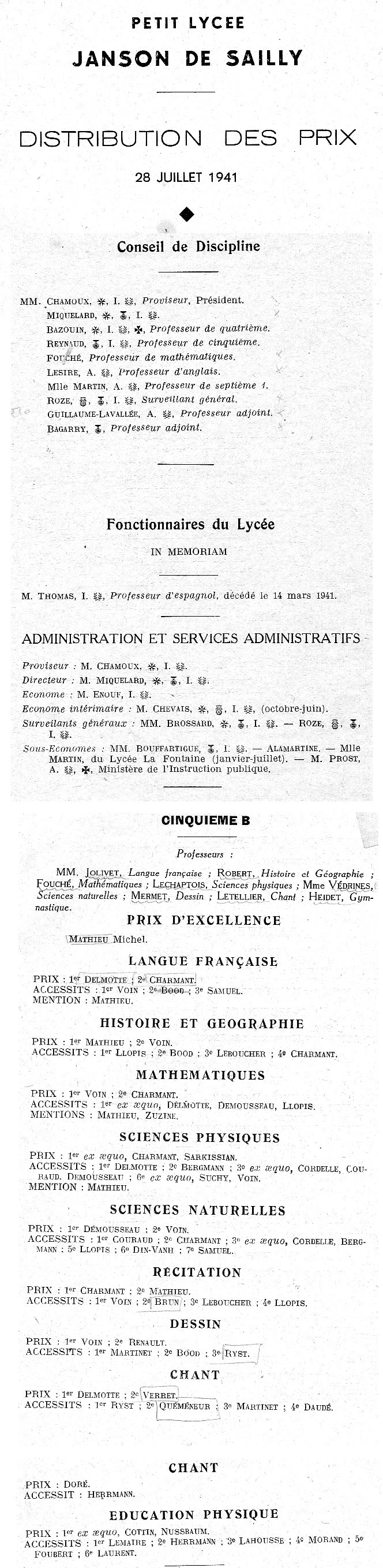
The 5th B prize list.
I only have a few things in physics and science, Nat...
(details)
Yves' fourth grade at the junior high school,
in 41-42
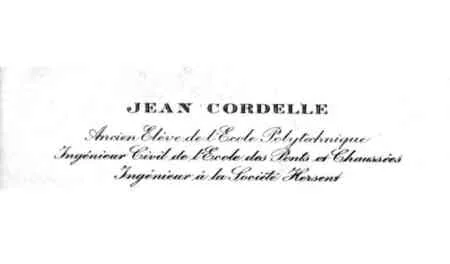
Jean Cordelle business card
(Details 1, Details 2, Details 3)
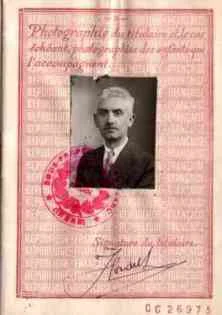
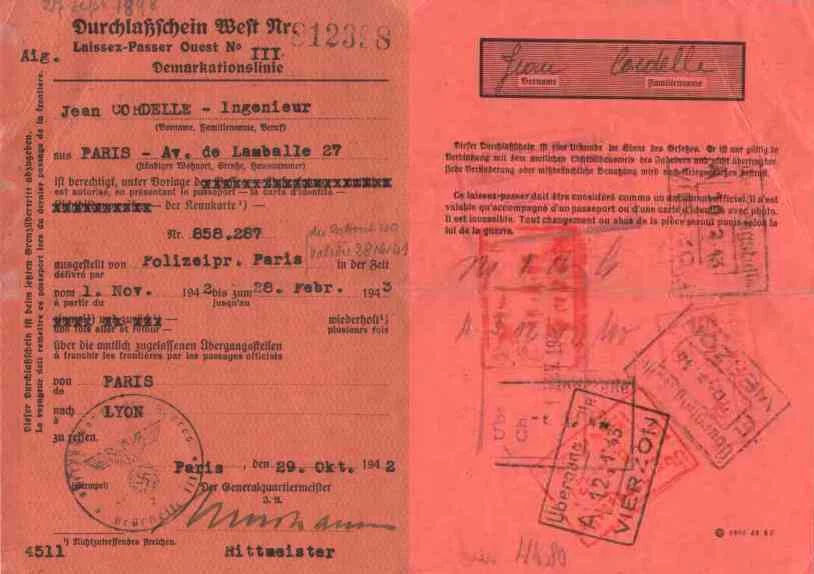
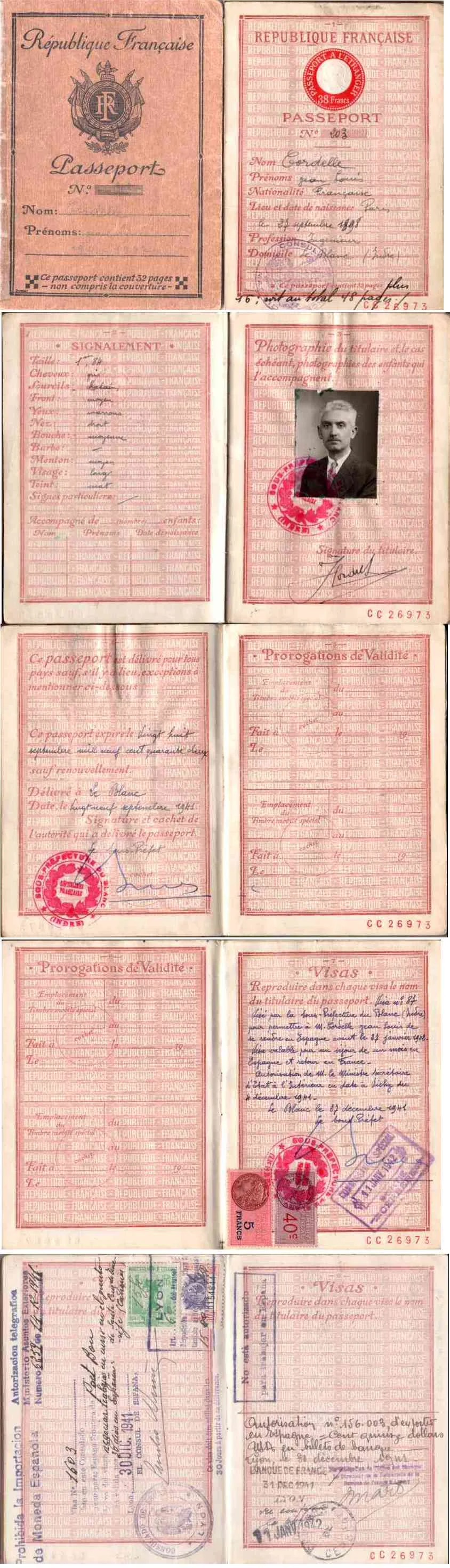
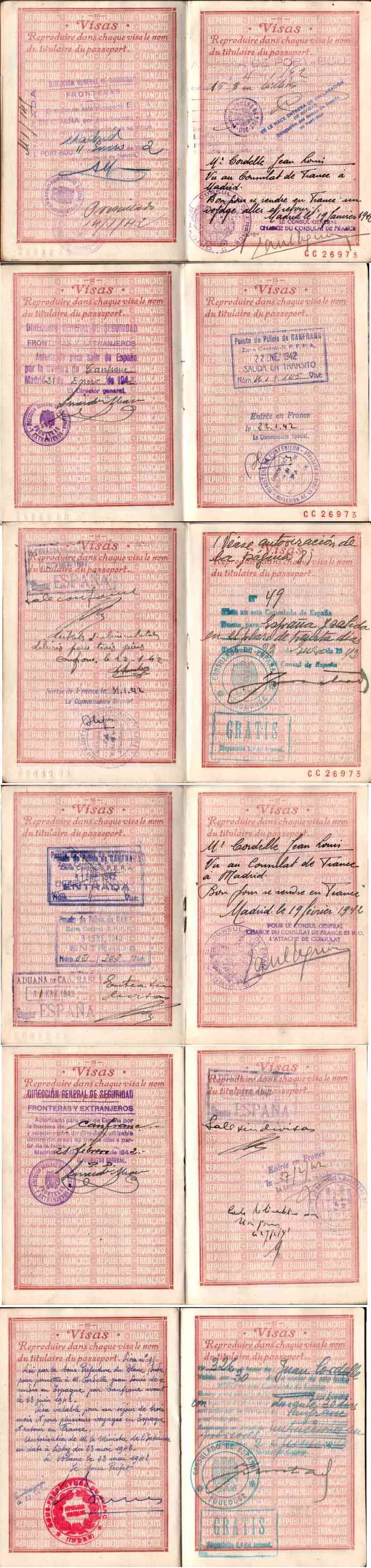
Passport Jean Cordelle
29 Sept. 1942, delivered to the White,
with the exit visas from France
and entry into Spain
Passport of 15 September 1942
Header of the Puma Madrid
Letter from Aunt Suzon (from Paris) to Mom who is in Vierville, in order to maintain a responsible presence after the death of Nany and avoid as much as possible more important requisitions of rooms in the castle. Suzon and Simon seem to succeed each other in Vierville."March 25, 1941, Ma Simon, I received your little note of the 24th this morning, but there are no letters from you up there (on the 7th floor, at Dad's) Again.
We have caused with Georges my possible departure that you advise me to delay until 6. It would be very tempting indeed, but in our opinion... rather unwise. It is certain that if it was to stay in the status quo, there would be no need to hesitate, but no one ever knew what was growing in the brains of high vegetables. (German staff) It could be that there is suddenly a change and a more massive arrival. It would still be silly to risk seeing a large part of our beds blow, just as they are most needed. (for the next vacation)
So it will be more prudent for me to leave for Vierville on Monday, March 1. I'll take the bus and the Phil will be nice to get me to Formigny, (so the bus followed the national without passing to Vierville) Or if the thing is impossible, Colibeuf will bring me to Formigny my bike, and I will leave my suitcase at Bonpain or L.? (Steeds from Formigny) I hope you're both well-off and very happy for you to see this one that's been waiting. (three) small are in good condition and easy.
A thousand kisses to all, your Suzon"
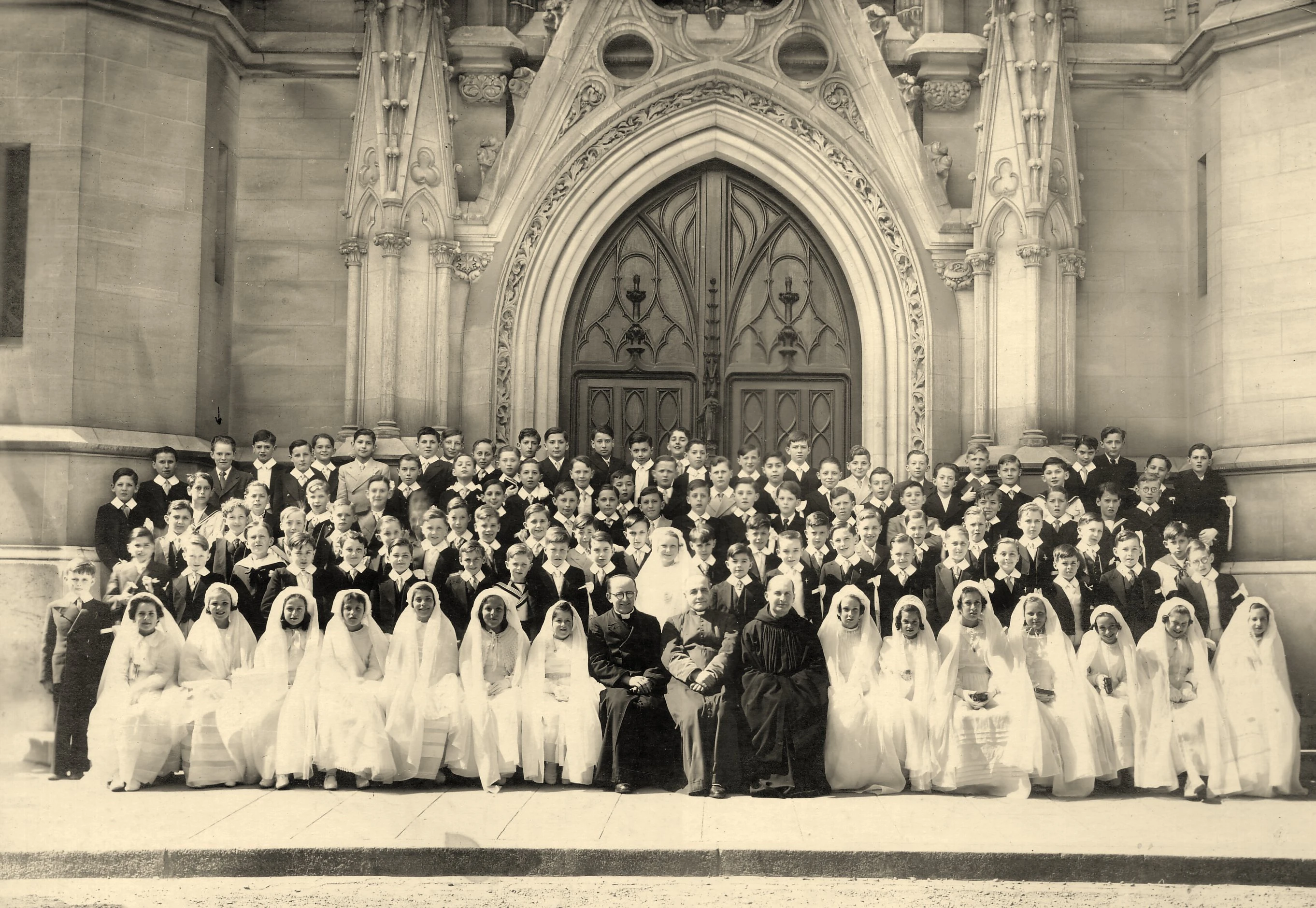
(details) First Communion of Yves, May 8, 1941
First Communion
Address of Hersent offices in Paris
"Ausweiss" with the "volatile" (i.e. the German buffer with the eagle and the swastika), allowing to cross the demarcation line between occupied and unoccupied areas (known as "no" zone)
Jean Cordelle regularly went to the White in the "no" area where Hersent offices were located, which were more easily connected with Spanish yards (in the Canary Islands, Tenerife).
Jean Cordelle went to Spain several times, and even to Tenerife in 1941 and 42.
The various trips are traced by examining the entry and exit stamps: France, Spain and Canaries











A question or a correction? Write to Yohann or Christophe
Each document is part of our history.Continue exploration