

The year 1944 and the Liberation
731
In Vierville, this was immediately seen, on 29 February 1944, the Germans informed the mayor, Mr. Louis Leterrier, that they needed the whole castle to house the Todt men who arrived three days later. We had three days (time on Friday 3 March at night) to empty the castle (occupied until then by only 1 or 2 officers and their orders) and leave the place. It was by hundreds of m3 that the volume was calculated to move or to abandon.
Called to Paris, Mom, Uncle Georges and Aunt Suzon jumped on the first train to Bayeux and arrived on the evening of March 1 in Vierville by the postal car (no taxi or bus). Mother's letters to Dad on March 1 and 2, 44). They found an extraordinary spectacle at the castle. The mayor and the population had not waited, they were all there moving the furniture, with dozens of agricultural carts, in the middle of a great disorder elsewhere. The mayor had made available the presbytery and on his side in Paris, with the help of the Hersent, Jean Cordelle sent a truck of miraculously found move. There were all the valuable furniture, which were stored on the 4th right, in the apartment of Nany. The coppers were placed in the old tower of the Abbey (which was destroyed on 6 June, everything disappeared there). Various tumblers were walled in part of the attic (but successive occupants found the cache and everything disappeared there too). The rest was carried to the presbytery and later was well damaged by the rain because the shells that targeted the bell tower, dipped the roof on 6 June.
The three-day period was held, thanks to the help of all and the solidarity of the village. The wine cellar was distributed in large part to the movers. Even the bathtubs, the fireplaces of the large living room and the large dining room were dismantled. The large barrels of 1800 litres of cider were also removed. In Paris this spring there were warnings every day. From time to time, from day, we saw "boxes" of heavy American bombers and the black flakes of the DCA. Every silver paper strip fell from the sky - antiradar decoys -. We were picking up some of the DCA shrapnel in the street.
The classes - I was in the first class - were disturbed by these warnings that forced us to go down with the teachers in the cellars of Janson High.
In the apartment, I remember only once going down to the cellar (the night of the bombing of the La Chapelle Yard in March 44, it was at 5 km, very impressive, with the Christmas trees of Bengal lights slowly descending from the sky, in the midst of the glowing bursts of bombs, the glowing smoke and the terrifying noise of the bursts and collapses of buildings, I was really afraid that day).
We also felt that in this area of the 16th arrondissement, we would not be targeted. It was true, but was it very careful? We had prepared everything, the small leather suitcase, marked YC, departure gift of the Tonazzi in Argentina, with all the important values to save.
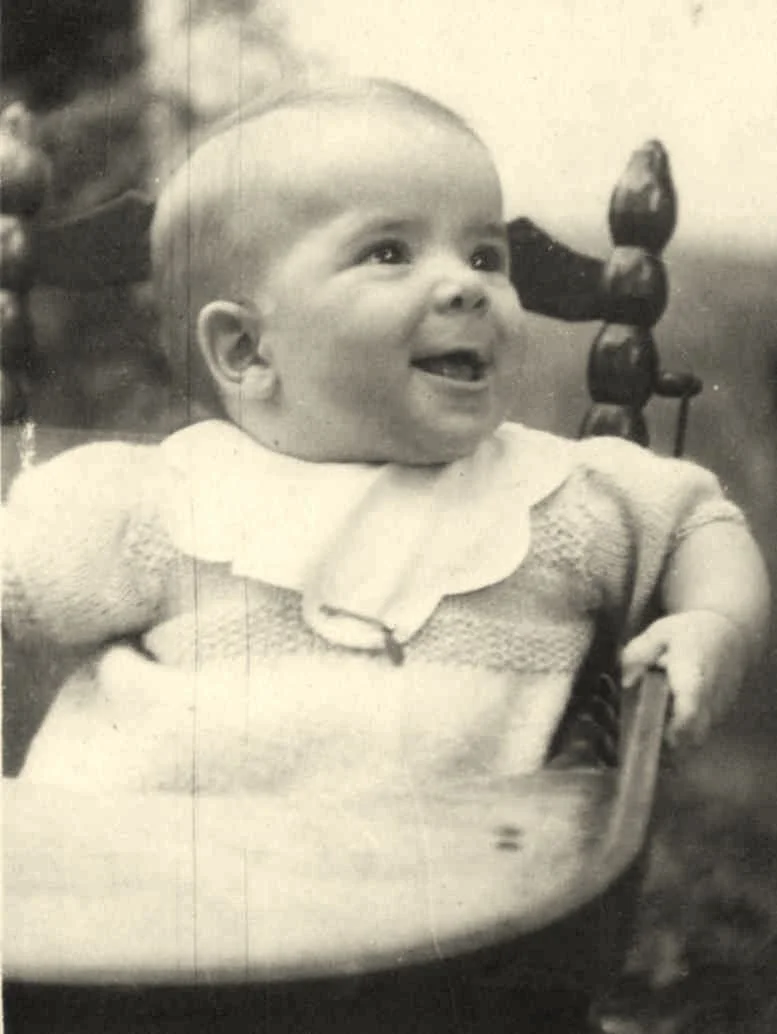
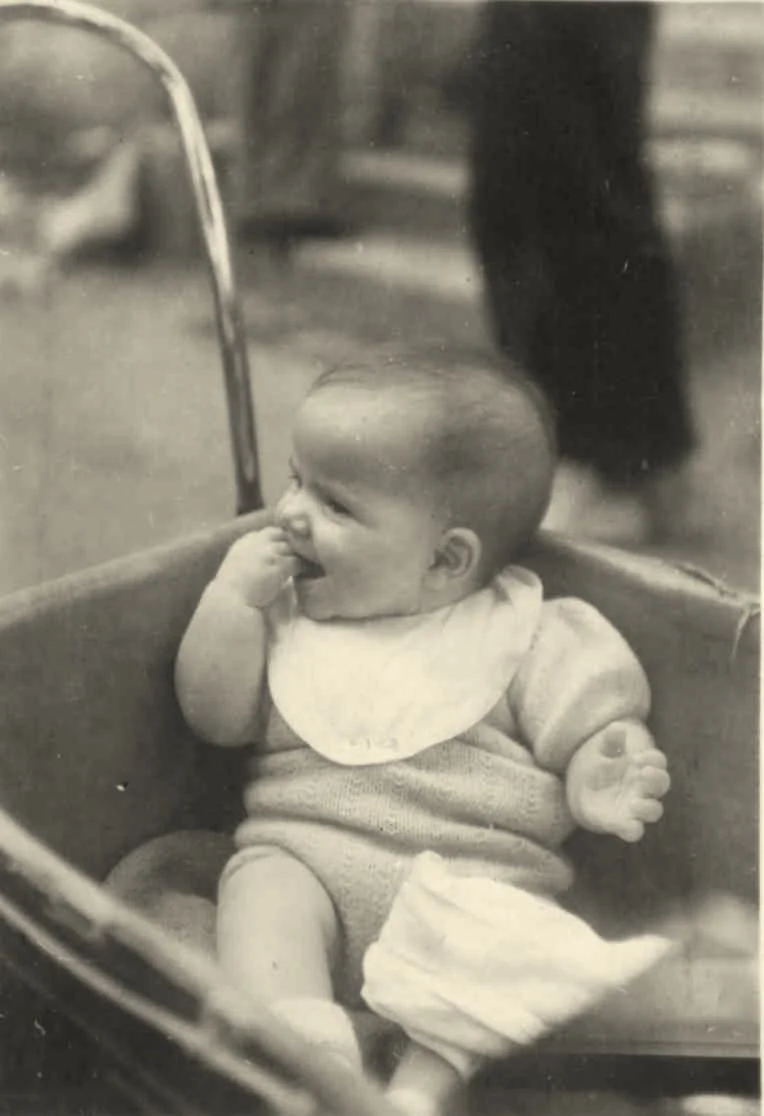
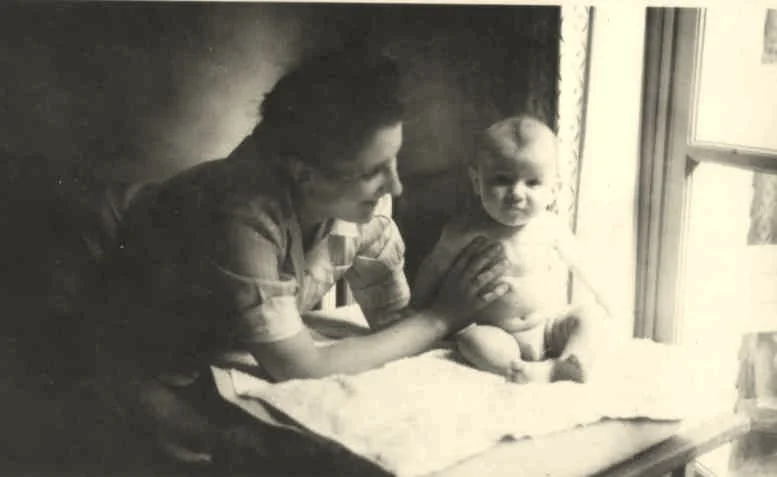
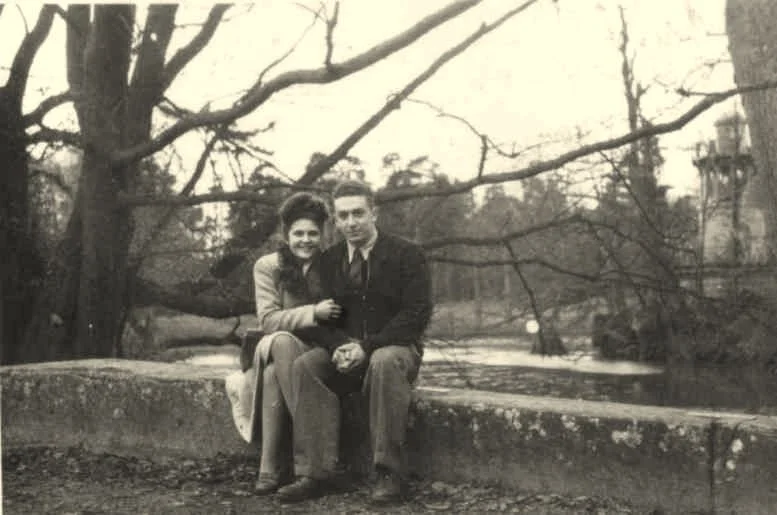
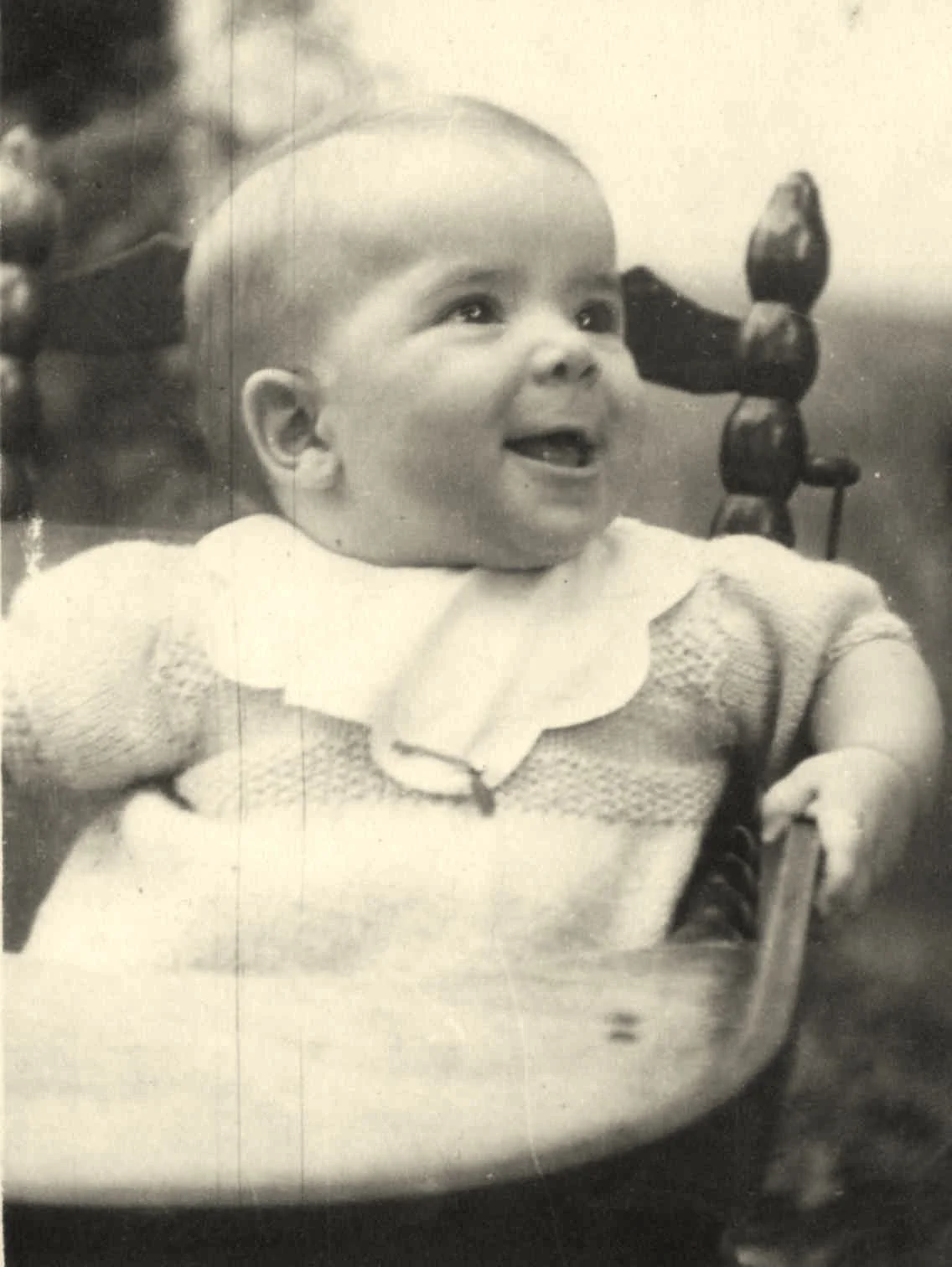
In the midst of all these events, life continued: Pierre-Antoine was born in March, François married on July 1st in Boulogne/sur/Seine.
On June 6, 44, the landing took place. In Paris, we were cut off from Normandy all summer. We were not well informed, because we even assumed that the landing had taken place only on June 7th, according to the rare indications of the newspapers. However, we had the first sure news of Vierville on July 1, 1944, the day François married. Mr. Poivre, Jean-Pierre's father-in-law, was present and he had received a letter from a son of Mayor Leterrier, The first day of the war, in the village of Caen, my parents and I went to the countryside for a few days. Vaux-sous-Chamigny, (70 km east of Paris, on the Marne river) with friends of friends. We went by train, came back by bus, a few days before the liberation of Paris.
On 19 August, the Parisian insurgency developed, but nothing in our neighbourhood. I had of course forbidden to go out, and therefore I saw nothing special, except the disappearance of the newspapers of the Collaboration, replaced by those of the Resistance. Around 20 or 21 August, a window of the building opposite us adorned with a large French flag. But a few hours after a German car passed, stopped, the Germans went upstairs. The flag disappeared and I saw the Germans leave with food, probably looted in the apartment.
On August 25, liberation from Paris, but I have not seen any of it, for eight days already, out of caution, ban on leaving.
The night before, we were informed by the radio that French tanks had arrived at the Prefecture, and I heard the bells ringing.
On the 25th, I heard shots, I saw from the terrace the Grand Palais burning. That's all. I didn't leave the house until several days after August 25. We didn't see anything fighting or the parade of de Gaulle on August 26. Tonton Georges, he, was seeing the big parade of August 28 on the Champs-Elysées, when the Americans made march for several hours throughout the 28th division of Pensylvania that was crossing Paris on the east. De Gaulle apparently asked the Americans for this demonstration of force to discourage the revolutionary ambitions of the FTP and the Communist Party.
I remember seeing many American aircraft from the terrace, and even learning to recognize them with their only noise: the transport Dakota, the observation Piper Cub, the Mustang, Thunderbolt, Lightning fighters (double-tailed, which produced a characteristic whistle), the medium-sized bombers Marauder, Mitchell, the heavy Flying Fortress and Liberator, the liaison Beechcraft, etc. We were watered with brochures and American news magazines that kept us better informed than the German-controlled press.
The first ally I saw from the window, on August 25 or 26, was in a curious self-trap that stopped across from Colonel Bonnet's street, it was a Jeep, I had never seen yet and his name was unknown to me of course. I don't know if she was American (the 4th DI), or French (the Leclerc division).
From the terrace, in August or September, I saw little Piper Cubs slowly passing between the legs of the Eiffel Tower, but one day it was a Thunderbolt hunter that I saw doing this passage at 300km/h! Tonton Georges and Brigitte Chedal were able to go to Vierville For the first time, see in what condition the castle was. Outside, it was only a little damaged (2 shells in the roof), but occupied by an American hospital. The interior was quite ransacked. Uncle Georges and Brigitte housed in a nearby farm (farm Auvray, where Martha was also located) where they moved the furniture kept at the rectory that no longer had a roof. They brought us to Paris some amazing news and images of our Norman villages, living in contact with the American superpower and its cortège of mechanical means. The peasants were enjoying the incredible waste of American materials, equipment and food, which for centuries had been used to throwing nothing, to using everything, and even more since the restrictions of the war.
My parents and I went in our turn in October, then in December 44, with the Peugeot 402 on its wheels (we got back into gasoline along the road with leaks of the US pipe-line that was going from Normandy to Lorraine). The castle was still occupied by the hospital, but landings had become rare, and the beach was still forbidden for civilians in December. It took us until March 45 to get back to possession of the castle and take pictures at the beach.