


MY VACANCES
A
AGON
Early July, 6 am A few years after 1945.
Get up, wake up!
Our mother wanted her children ready to leave at 8 am.
We called it Mom, rather "MANMAN," which made a few pieces smile "reported" or not, grafted to our family.
Later, some sons-in-law simply called her "GILLETTE". The next generation knew her only under the name "MAMILETTE" and that was suitable for everyone.
It was useless to wake us up, for several days already, we were waiting for this moment... to find the sand, the sea, sometimes the sun.(I have to confess that I have very few memories of rain), the fishing instruments and the tennis rackets, not to mention the friends we hadn't seen in a little year.
For several days, we counted the hours that separated us from this magical moment where PAPA had charged the BERLIETof everything that is necessary for a family of 7 children for 2 months of vacation, did the ultimate checks of use tires, oil level, toolbox, the spare wheel fixed in the left wing. BERLIET was a right-hand drive, with three straps looking back and a large trunk specially designed to receive two large brown leather trunks, which contained the bulk of our move. One or two other wicker trunks and the big bikes had left by train and were waiting for us at COUTANCES or AGON station.
Everything is now ready for departure: shutters, gas, electricity, doors are closed for two months, and finally almost because PAPA will go back and drive us; it will take its holidays in August.
The starter is making his bad head. It's only a matter of habit: a few crank tricks avoiding dangerous returns.
We are all willing to open the big black grid of the "120" that separates the BERLIET from the road to the street of AGON.Everyone embarks, without avoiding some chamilleries for the choice of places, the strapons being very coveted!

The scale closed over ten months of school activity, with varying results, BERLIETAnd his crew can finally take the western route, synonymous for us with sun that goes down later, of sea that disappears for a few kilometers as the tides flow and allows wonderful peaches on foot, the smells so characteristic of the sea, of kelp loaded with iodine and that the sea, by withdrawing, left on the sand in great quantity, (varesh harvested and loaded on carts drawn by brave and strong horses, to be used in pharmacy or fertilizer) tennis, buddies and many other things.
This migration was traditionally organised in two main stages.
- from 120 to BOURTH
- From BOURTH to AGON Street.

Because it was at BOURTH that ANTOINETTE, half-sister of "MANMAN" and Pierre MARGOTTAT, her husband, exploited a field dedicated to culture and breeding.
JACQUES, the second in the fratry, did internships and harvests there in the summer.
There, it was already a taste of the holidays:
house with fireplace, horse, country, smell of cut wheat, butter clogs bartted on site with great attention and love, hunting trick that Peter sounded, right and well. One of his sons took over with so much talent and sounded of the trompe in prestigious places.
His eldest daughter raised in this environment dedicated her life to horses. It is probably difficult to escape from the atmosphere that bathed our first steps.
After an excellent meal, we must go back to the west. It is about fifteen hours.
Our whole world is back BERLIET and its surprises
Tough to leave BOURTH, but happy to return to the west to "the street of AGON "
After about half an hour "Dad, when we arrive" or "Dad, pee" and it lasted until Coutances, in the almost sunset of Villedieu-les-Poëles, sparkling with its dazzling brass.
CUSTOMS! I was born there in November, two months after the declaration of war involving France and Germany. I did not, of course, remember my first weeks or months; it is said that the winter 1939-1940 was particularly harsh, that 50 centimetres of snow covered the garden of the "rue d'AGON" and that the room where "MANMAN" slept, while watching my first days rarely exceeded 7°C.
It is said in the family that my eldest brother YVES, a sleepwalking ten years old, had a habit, when the night was very dark and the ground was very white of snow, to open the kitchen door, to take a little walk in the garden and to lie back as if nothing had happened, with an amazing natural event, which he said he had not kept any memory of.
In the sun soon, BERLIET and his crew arrive in view of Coutances, visible from afar, like many cities in our beautiful country of France, thanks to the bell tower of his cathedral which survived, as by miracle, the numerous bombings of the last world war.
There are only about ten kilometres left before reaching our final destination:
"The RUE OF AGON",
These are probably the most difficult: the coast of Delas was formidable and even first, our faithful BERLIET refused to ascend.
A suspicious water vapor was escaping from the radiator and it was high time to act.
So PAPA was driving down the "big ones" that were pushing up the coast.
There, the engine could rest.
A few kilometers further, shouting of joy from all the sea!
We've been waiting for this moment for several months!

THE MASON OF AGON
A few moments later, you pass the statue of Admiral TOURVILLE and take the rue d'AGON, on the left; you will return later to Father RAOUL to look for potatoes, fruits, cider... and calvados.
I mean, it's the "RIGHT OF AGONS"
We are eager to climb the outside staircase, to find there the land where we made bloody croquet parts, the smells of the tide, salt marshes, the house with which we knew the least corners:
On the ground floor,
Summary kitchen, living-dining room where we spent most of our time outside our outdoor activities. (It seems to me that this room had a fireplace that I never saw working; obviously it was summer). The table could accommodate about 20 people, which was very often the case.
Four rooms, including those of MEME, mother of "MANMAN" the only one equipped with running water.
A dormitory of girls and a dormitory of boys: the polochon battles were formidable; it was in this dormitory that, against winds and tides, we had to take a nap after lunch.
The wall of Agon's house was our final destination.
His kitchen was built on a very characteristic rock that was the purpose of our expedition, our past memories and those of the future.
The amenities were made up of an appendage attached to the house. This place was summative, without running water, and we were often twenty or more times to live in the house... it was perhaps at that time that the "mouths" became later infamous by Bison Fute.
The end of the garden was a market garden. MANMAN had sown several green bean boards, ready to pick for our arrival. many gatherings around I don't think I ever found such green, wireless beans that melted so nicely in the mouth.
MANMAN was doing the market twice a week, and the other shopping was done at AGON's grocery store. Milk and eggs every day at the farm near the house.
During these two months, or more, where MANMAN lived in this house of AGON, we were not alone: We lived with Aunt YVONNE, (called aunt VOVO) beloved sister of MANMAN, my uncle André LIEBAUT, her husband, Jean-François and Jean-Yves, our cousins, their two children. (A thought for Jean-Yves who just left us) and of course MEME who lived in the lower room, the one who had running water.
From time to time Pierre and Antoinette MARGOTTAT came from BOURTH, and Jean DUPUIS, half-brother of MANMAN.
MANMAN's father, born BIDEL, was a polytechnician and engineer of the Mines, and disappeared in a fire-burning blow at the head of his black mouths at the age of 27: MANMAN was then two years old.
Then often came "rue d'Agon" tonton CHRISTIAN, brother of PAPA, the left arm redr than a well cooked lobster, the left arm of a white nacéan: He was the passenger of our good old man BERLIET (driving right)
I naturally forget my brothers' friends, foreign language correspondents and my parents' families who could stay on Rue d'Agon for a day or two or more.
In short, the table, at noon and especially in the evening was, most of the time, full.
On August 15, we had the traditional salted meadows. It was cooked with love and care at our baker of AGON, not far from home. It came from the famous Lombardi butcher shop. It is true that this leg could not be compared by taste, flavor, smell, tenderness, with the other "earth" gigs I could eat elsewhere. (MANMAN also excelled in whole calf liver with carrots, a real delight of papillas, once or twice a summer).
The dessert was then made of nougatine, delicious small boat-shaped cake with incomparable taste and unctuousness.
Of course, automatic washing machines and dishes did not exist and solidarity was the rest, in a friendly mood.

THE VIEW
The house of AGON turned its back on the Channel.
Considering the topography, it was invisible anyway, but I remember spending long and peaceful moments observing the flow and the reflux that gave life to Siena, an arm of sea that fell into the Channel at the tip of AGON, well known to navigators who had nothing to ignore about the hours and heights of the tides.
The penalty could be to spend a very uncomfortable night, the boat lying waiting for the next high tide to re-float.
The English who came here had largely adopted the sloop.
On the other side of this sea arm, we distinguished Heugueville, Régnéville, Montmartin, Hauteville; we could guess Granville. This place was less than 100km away as a bird flight from Mont-Saint-Michel, which explains the very high amplitudes of the tides and therefore the strength of the currents.
At high tide, the Siena was coming out of her bed and invading the "maras" which were reached by a small road of dirt and gravel that was leaving the house. At the great tides, we went down this path to see the marsh full of water. Of course, the sheep had returned carefully, avoiding that men and animals would fall into holes sometimes difficult to discern.
It was still days of rain: it was the good and penetrating Norman. Then we stayed at home with various occupations: Monopoly endless during which predators were quickly unmasked. They wanted all the land to be able to build houses and hotels, but refused to separate from Avenue Mozart or Avenue Foch that were very interested in one of us.
MANMAN excelled at the game of crap, especially if she was rabid (the card games rarely ended in summer intact), not to mention all kinds of success.
When the sky was clear but it was too late to go to the beach or tennis, we set up croquets and held small tournaments; the bell was formidable.
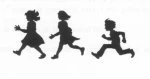

It was about three kilometers. PAPA, having left at "120", we were delivered to ourselves, and to go from the rue d'AGON to the beach or tennis in Coutainville, we had bikes for the tallest and strollers for the smallest, drawn by one or pushed by the other. We then went through the Mare de Lessay, on a sandy road where the strollers were more than necessary. But it was the game to arrive at the asphalt road of the Mare Vallée that brought us to the beach or tennis.
Of course, the expedition started in the morning, with the necessary provisions for a picnic on the beach. For the larger ones, the sandwiches were tasted in the theoretical shelter of the paillottes. It happened, that as a result of the change of wind, we ate as much sand as bread and ham
The paillottes were, it seems, a specialty of Coutainville; I have never seen them elsewhere.
A peacock was made of a heavy, solid rectangular wooden frame; between these woods, straw whose role was to stop the wind and sand. This piece was based on two isoceles triangles of identical composition.
The pelagic pelagic was then directed according to the direction of the wind.
This also allowed the older ones to feel free from indiscreet gazes during summer lovers.
-
THE SEA
She was alive, thanks to the tides.
It went far, probably more than a kilometre away, leaving the sand wet and the fisheries.
At high tide, it climbed at high speed on warm sand and offered us splendid wave baths in the middle of the afternoon: these were good times.
At the high tides, and by the most frequent western winds, the paillottes had to be raised. The sea would break on the dyke.
It was also an opportunity to shape sand castles, more beautiful than each other. The imagination was in power as to their architecture. The hours necessary for the construction of these castles were destroyed in a few minutes by the calm force of the rising tide.
The same was true of the logs, which had been used for long hours, with tunnels and other difficulties.
The high tide forced us to rebuild everything the next day.
On the days of celebration or simply of great desire, we took the traditional walk along the dike that was located in the first line and whose view was breathtaking between the lighthouse of Sénéquet and the Chausey Islands, and even more.
In clear weather, we could see the lights of Saint-Hélier or Saint-Clément on Jersey.
Of course, the "second line" houses could not benefit from these privileges!
My sister BLANDINE married Jacques KUCZER, a faithful member of the Young France, a rival club of the T.C.
They're the only ones spending part of their vacation in Coutainville.. first line.
This walk was an opportunity to meet the friends and go together to taste these famous colorful hot lollipops made in front of our amazing eyes.
At high tide, we were "learning" the sea on the Doris de Maurice ROUELLE, friend of the family.
There, we met with its strengths, its bursts, its intertwined waves, its flat calms, the watering and the sometimes delicate docking.

The closest ports were far away. The fisheries were mostly on foot: grey shrimp, bouquets, crabs of all kinds, hulls, weevils...
MANMAN was a specialist in shrimp. At the high tides, she was seen going alone to the rocks of Sénéquet or elsewhere, with her net and going to unearth the bouquets in the smallest holes of rock. Being carried away by her impulse or surprising by the sea that was rising, she often returned soaked up to the belt.
She sometimes went to grey with her haveneau, but the bouquet remained her best fight. In the evening, she counted everything: "There are 842". She knew how many bottles she had used to try to make seven of us adults; how many stairs she had climbed and descended, and how many rows she had knit in her life.
The sandalfish was one of my favourites. (The sandalfish is about 20 cm long, very bright, very thin, and very lively, delicious in frying). We left before the low sea with the appropriate tools: shovels, rakes, plows, buckets...
The large ones were moving the sand with rakes and plows, the lancens were then taken by hand.
PAPA used its shovel to stifle the spears that had escaped us. Woe to those who left their hands under the shovel! Woe also to those who, believing they were taking a shovel, took a sharp, fearsome venom in their hands, distilling its dorsal edge. Pain was very intense and urine remained the best remedy; yet it was necessary to be able to perform.
A day of dead water where fishing was difficult, we went in trio with YVES and MARIECLAIRE who had come to AGON to help MANMAN and thus also take care of us, in the marsh, near the house.
I was supposed to be about eight years old, and after a while I remembered being alone and hearing distant "sirs." She became my sister-in-law and they had two beautiful boys.
It was at that time that Marie-Claire taught me that the children were not born in roses or cabbages.
THE TENNIS
The T.C.C. - TENNIS CLUB de Coutainville is a family story. It was founded in 1898 by some young dynamics including our great grandfather BIDEL.
MANMAN was very diligent and a good tennis player, she had won single and double mixed tournaments in the 1930s.
Everyone in the C.T. knew Gillette, her bag that was over her racket and knitting needles, her kid's ribbelle that she had passed on to.
His cartoon is in a prominent position in the portrait painting that still adorns the T.C.C.'s piece of honour.
In the early years, I was watching for Manman's moments to borrow his racket and make my first weapons on the adjacent wall of the locker room,
The shorts were cement, very fast and used bullets and shoes more than reason, to MANMAN's great damn who managed the family's expenses at best.
Later, our equipment allowed us to play in training, and get some results at the Minima tournament.
Outside the tournaments, which attracted many people, Coutainvillis or not, players or spectators, big or small, the best made a "exhibition" in single, but especially in double. This happened in the late afternoon, and most often the actors were André Favière, André Pfeiffer, Maurice Rouelle, and Nono Lenoir....
There was no stand, the assiduous spectators were sitting on seats or garden benches. A few meters separated this court number 1 from the club house. There was a small bar where Madame Labetta served us a glass of water or grenadine.
There was also a bridge hall for the rainy days. On the fine days, these parts of bridge played on the grass and under the trees that surrounded the courts.
Our uncle André LIEBAUT was very busy. He always came in the early afternoon, in suit, tie and hat. He was a good player. He did not change his outfit when he came to spend a few moments on the beach.
This period of the big tournament was a small source of revenue for us. The organization of the tournament required that all matches from the first to the last round be arbitrated.
Some of us were selected to play this role, difficult on cement because the bullets leave no trace, but mainly because of some recalcitrant players or bad faith who challenged many of the decisions we, young people, had made in good faith.

Then we had to be free from these hesitant fair play players.
I admit, though, I was probably 12 years old, having arbitrated on court number one, a match between a 2/6 and a 15. Their fair play made things easier for me, but the balls were fast along the lines ....!
Beyond this level, the chair referee was assisted by line referees who facilitated his profession.
The C.T.C. officials were never short of ideas that fortunately continued.
One of these initiatives is very old and still exists: THE WORDS OF GOD THE VEULT.
The participants are drawn by double lots, the matches being by direct elimination,
It is obvious that this could lead to epic games where a player or a 2nd series player, having "heritage" of a player not classified with modest claims, was "out" by a double formed by the random drawing, but more effective.
The T.C.C. also organized a rally that took place in July-August. Like any rally, it was good to embark dictionaries, encyclopedias, detailed maps and history of the region.
The T.C.C. ball was also an event. It was held at the Casino, near the Grand Hotel, on the beach. It was the occasion of the election of MISS CHARDON BLUE, elected for her smile, her kindness, her openness to others. The jury was made up of prominent members of the T.C. Madame de Fontenay was not part of this jury, but I remain convinced that she had in mind this election of MISS CHARDON BLUE when she initiated the election of MISS FRANCE. My sister MONIQUE was, one year, elected MISS CHARDON BLUE ... !
Since these years and to this day, have there been any changes?
- The sea is always going that far.
- The kelp is still being collected, probably in less quantity.
- The horses were replaced by tractors.
- The fisheries have given way to oyster parks,
- The seafront, as well as the interior remained identical.
- No concrete per tonne, same or not in first or second line.
Only the dike was strongly strengthened, to resist the sea's assaults at the great tides. Its strength then became irresistible by the great wind of Noroît or Suroît.
- The view, too, has not changed.
- As for tennis, if the old cement courts were redone in quick, more pleasant for ankles, shoes and balls, the club house has hardly changed in 50 years or more.
What a charm and memories!

Each one will make the corrections that he thinks will be useful, so that they can be His vacation in AGON.
All right, good end of century.
This original edition was printed in 20 copies on white velvet paper numbered 1 to 20. It was also printed, with a few copies not sold to employees, and to the media.Edition from the Agachon Presses Gathering in the special workshops of the Literary Image.